
How to Choose the Best Roof Coating for Your Building
Last Updated: November 21, 2026
Quick Summary
The best roof coating depends on your roof’s material and condition, so confirm the substrate and check for soft spots, blisters, and failed flashing before buying. Silicone suits flat roofs with ponding water, while acrylic fits pitched, well-drained roofs.
- Silicone coating handles ponding water well; acrylic coating is not recommended for ponding.
- Compare products on installed cost per square foot, not price per gallon.
- Concrete decks need an elastomeric membrane and must be clean, dry, and free of laitance.
- Skipping the second coat to save material is a common reason coatings fail early.
- A non-prorated warranty covers the full term rather than reducing payout over time.
Table of Contents
- How to Match the Best Roof Coating to Your Roof Type and Condition
- Silicone vs Acrylic Roof Coating: How the Two Compare
- The Best Roof Coating for Flat Roofs and Ponding Water
- The Best Roof Coating for Concrete Roof Decks
- Roof Coating Coverage and Lifespan: What to Expect
- Schedule a Roof Inspection With a SureCoat Approved Contractor
- Frequently Asked Questions
How to Match the Best Roof Coating to Your Roof Type and Condition
Finding the best roof coating starts with two questions: what is your roof made of, and what shape is it in? At SureCoat Systems, we tell every building owner the same thing: the coating that performs on a sound modified bitumen roof can fail on a chalky, saturated one. The coating is only half the equation. The surface underneath decides the rest.
Start With What Your Roof Is Made Of
Roof coating compatibility follows the substrate. Built-up and modified bitumen roofs accept most elastomeric coatings, provided the existing surface is clean and sound. Metal roofs need a coating that bonds to seams and fasteners, and rust must be treated first. Concrete decks behave differently again, which is why they get their own section below. A common mistake is ordering coating before confirming the substrate. Check the roof assembly first, then choose the product.
Check Condition Before You Commit
Coating restores a roof; it does not rebuild one. Look for saturated insulation, soft spots underfoot, blisters, and failed flashing before you spend anything on material. Standing water that never drains points to a slope or drain problem that coating alone will not fix. If the deck is wet or the membrane is at the end of its life, restoration is the wrong tool. A roof that is structurally sound but weathered is the ideal candidate. That distinction saves more money than any product comparison.
Silicone vs Acrylic Roof Coating: How the Two Compare
Silicone and acrylic are the two coatings most buyers weigh, and they solve different problems. Silicone coating resists ponding water and holds up under constant sun exposure, which suits flat roofs that drain slowly. Acrylic coating is generally better suited to pitched, well-drained roofs, while silicone is the stronger choice where water sits.
| Factor | Silicone Coating | Acrylic Coating |
|---|---|---|
| Ponding water | Handles it well | Not recommended |
| UV protection | Excellent | Good |
| Adhesion to chalky surfaces | Strong | Needs primer |
| Typical cost | Higher | Lower |
| Best for | Flat roofs, standing water | Sloped, drained roofs |
If you are weighing acrylic against silicone, read the acrylic coating details before you decide, and compare the silicone roof coating system side by side. The choice usually comes down to drainage, not price.
The Best Roof Coating for Flat Roofs and Ponding Water
For flat roofs with ponding water, the best roof coating is a fluid-applied, fully adhered membrane that tolerates standing water rather than one that merely sheds it. Many conventional coatings exclude ponding water from warranty coverage, so it is worth confirming how any warranty treats standing water before you buy.
What Actually Matters on a Ponding Roof
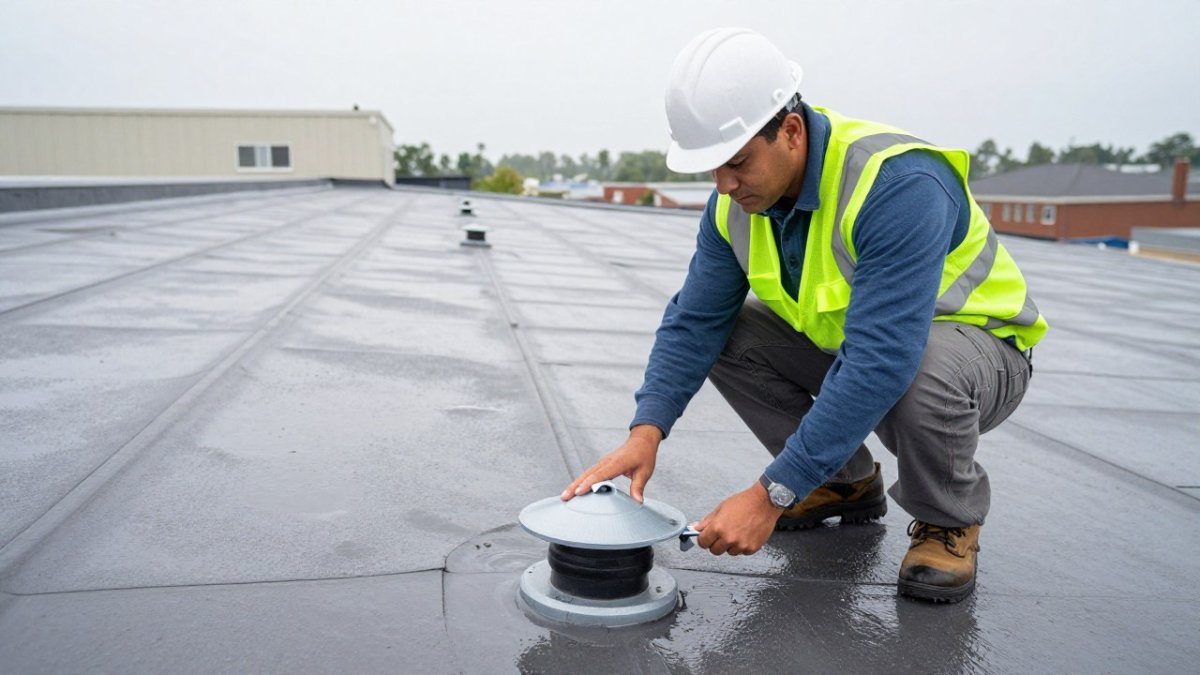
Ponding water stresses a coating in three ways: constant hydrostatic pressure at seams and drains, repeated wet-dry cycling that swells and shrinks the film, and dirt and biological growth that degrade the surface. A coating that handles ponding must bond tightly enough to resist pressure, stay flexible through cycles, and carry a warranty that explicitly names standing water. Warranty language is a useful way to separate products built for ponding from products that merely tolerate occasional puddles.
Compare Like-for-Like, Not Just Price per Gallon
A low price per gallon can hide a higher installed cost. Compare products on installed cost per square foot, which folds in coverage rate, number of coats, primer, reinforcement, and labor. A product that covers more area per gallon at the specified mil thickness may cost less installed even at a higher bucket price.
Watch out: comparing bucket prices without normalizing coverage and coats can lead to a misleading comparison, because a cheaper coating that needs more coats may cost more installed.
Drainage and Roof Design Come First
No coating fixes a roof that cannot drain. Before choosing a product, confirm that drains, scuppers, and gutters are clear and that the roof has enough slope to move water to them. Standing water that never drains points to a slope or drain problem that coating alone will not fix. If ponding is severe, correction of drainage or slope should precede or accompany the coating, or the warranty may exclude the very condition you are trying to solve. Once drainage is sound, the choice of a waterproofing coating can focus on how well it suits a flat roof’s conditions, a distinction worth considering alongside ARRC Ltd.
Where Silicone and Epoxy Hybrid Systems Fit
A fluid-applied epoxy hybrid membrane reinforced with polyester is applied as a seamless, monolithic layer that seals seams, flashings, and drains. The SureCoat Roof System is designed for ponding water conditions, and the manufacturer’s warranty is non-prorated, renewable, and covers ordinary ponding water when an approved contractor installs it to warranty requirements. Browse the flat roof coatings to see the products matched to ponding conditions.
The Best Roof Coating for Concrete Roof Decks
Concrete decks need a coating that bonds to a porous, often alkaline surface and moves with temperature swings. The best roof coating for concrete is an elastomeric membrane with strong adhesion and enough elasticity to bridge hairline cracks instead of cracking alongside them. Surface preparation decides the outcome here.
Watch out: coating over damp concrete traps moisture and causes blistering, so test for moisture before application. The payoff is real. A properly applied membrane can help protect the concrete and reduce water intrusion at seams and drains.
Roof Coating Coverage and Lifespan: What to Expect
Coverage and lifespan are where marketing claims and field reality part ways. Most coatings list a coverage rate per gallon, but that number assumes a smooth, prepared surface and the full number of coats. Rough or porous roofs absorb far more material, so always buy against the manufacturer’s stated coverage for your substrate and add a margin.
Coverage per Gallon and Coats Required
Coverage per gallon varies by product and surface texture. A common approach is to calculate the roof area, divide by the manufacturer’s stated coverage, then add extra for a second coat and for porous surfaces. Skipping the second coat to save material is one of the most common reasons coatings fail early. Follow the specified mil thickness, not a guess. When you request quotes, ask for the coverage rate at the required dry mil thickness, the number of coats specified, and whether a primer or reinforcement fabric is required, because those three inputs drive the real material quantity.
Service Life, Warranties, and What Voids Them
Service life depends on coating type, surface prep, and climate, so treat any single lifespan figure with caution. The warranty is the more reliable signal. Read what it covers, whether it is prorated, and what voids it: poor preparation, unapproved applicators, and neglected ponding water are frequent exclusions. A non-prorated warranty means the manufacturer stands behind the full term rather than reducing payout over time; a renewable warranty lets you extend coverage if you maintain the roof. Review the SureCoat Systems warranties to see what coverage includes and what cancels it.
Lifecycle Cost Beats Sticker Price
A transparent comparison looks past the initial price to installed cost, maintenance, and expected service life. Installed cost includes material, primer, reinforcement, and labor. Maintenance includes periodic cleaning and inspection, and any touch-ups the warranty requires. Service life determines how often you repeat that spend. Divide total lifecycle cost by expected service years to get an annual cost you can compare across products.
Watch out: a warranty that excludes ponding water, or that is prorated, can leave you paying for repairs the brochure implied were covered, so read the exclusions before you compare prices.
Schedule a Roof Inspection With a SureCoat Approved Contractor
Choosing a roof coating involves matching the product to your substrate, your drainage, and your roof’s condition, then installing it correctly. An inspection settles the question fast. An approved contractor confirms whether your roof is a restoration candidate, specifies the right system, and installs it to warranty requirements so the coverage actually holds.
A full tear-off is not always necessary for a roof that is a suitable restoration candidate. SureCoat Systems offers a fluid-applied epoxy hybrid membrane, a non-prorated renewable warranty that covers ordinary ponding water, and Energy Star and California Title 24 compliant products. Find out what an approved SureCoat contractor can do for your building.
Frequently Asked Questions
What is the best roof coating for a flat roof with ponding water?
Many warranties exclude ponding water coverage, so check how any warranty treats standing water. If your flat roof holds water for more than 48 hours after rain, look for a coating system whose manufacturer warranty explicitly covers ordinary ponding water, and confirm the installer is approved to issue that warranty.
Is silicone or acrylic roof coating better for my building?
It depends on the roof and the climate. Drainage and ponding history are important factors when comparing silicone and acrylic roof coatings.
How much roof coating do I need per square foot?
Coverage per gallon varies by product and by how porous the existing roof surface is. Calculate from the manufacturer’s published coverage rate at the specified thickness, allow extra material for seams, flashings, and drains, and confirm coats required with your contractor before ordering.
How long does a roof coating last?
Service life depends on the coating chemistry, the number of coats, surface preparation, and exposure. Service life varies with coating chemistry and roof conditions. Lifespan claims on a product label assume correct application and a sound substrate. Ask what the warranty actually covers, whether it is prorated, and whether it excludes standing water, since those terms reveal more about real durability than the advertised year count.

SureCoat Systems Donates New Roof to Bruno Serato Anaheim White House
When a little roof leak inspires a fun new way to give.
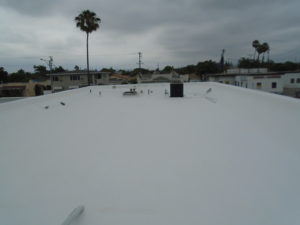
After a devastating fire a few years ago, most of the main restaurant building was rebuilt. The ballroom received a facelift with the reopening of the restaurant, but a new roof wasn’t an option at the time for the West Wing. Unfortunately, it started showing a few new roof leaks with last season’s heavy rains. Originally built in 2010, the flat roof looked older than its nine years and had been repaired many times.
SureCoat Systems is proud to share that the Anaheim White House West Wing now has a new roof, this new roof was donated as our way of saying Thank You. Serato who is a renowned chef, author and philanthropist is the owner of the Anaheim White House, and founder of Caterina’s Club a non profit organization that serves over 5,000 warm nutritional meals every night to underprivileged children in the Orange County area.
This last year he found leaks in the roof of the West Wing and with everything he has on his plate, he knew he needed help. Although not a part of the original historic building that houses the restaurant, the Anaheim White House’s “West Wing” is a 2,000-square foot banquet hall which is home to many special celebrations. But most important to Chef Bruno, it is the much-needed space for Caterina’s Club events & training. With a focus on feeding 5,000 kids per day, the space is essential to one of Orange Counties most renowned charities.
BEFORE
DURING
AFTER
Luckily, Caterina’s Club volunteers, Mickey and Vickie Sharples of RoofersCoffeeShop.com had some ideas for the new roof. “The Sharples introduced us to Carolyn Martinson and she came for dinner,” stated Serato.
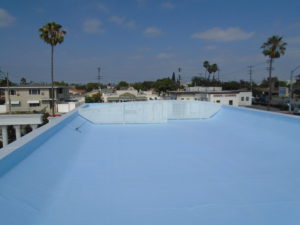
Carolyn Martinson, owner of Surecoat Systems of Southern California, a roof and waterproofing restoration coatings manufacturer, is a big fan of owner chef Bruno Serato and the work he does with Caterina’s Club. “What better way to help Caterina’s Club than to help the restaurant that serves as its foundation,” noted Martinson. “We knew we wanted to restore their West Wing roof for free and knew just the contractor to do the job. This project had to be done without damaging the beautiful ceilings or fixtures in the ballroom and needed to hold up to constant ponding that can be prevalent on flat roofs.”
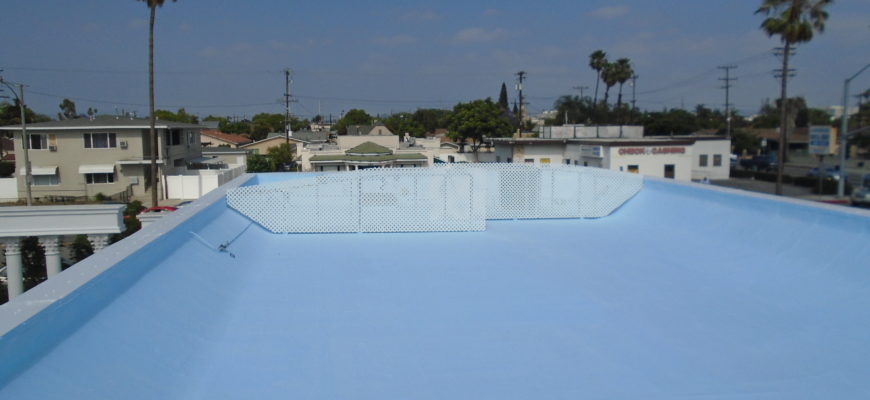
The new roof features a specially designed roof coating system, developed by SureCoat Systems; it is a seamless, liquid applied, fully reinforced roof system with one of the lowest perm ratings in the industry. They chose a blue color to reflect the sky since the roof can be seen from other rooftop areas. Using the SureCoat roofing system eliminated the need for removing the old roof which could have damaged the beautiful existing interior ceilings and fixtures.
SureCoat waterproof coatings are Title 24 compliant products, have no odor, reflect the heat and can withstand ponding water. This was an important aspect for the installation team in order to provide the cleanest, odor-free worksite possible for the restaurant while applying a premium roofing system. The new roof can be renewed with a fresh topcoat every 10-years without replacement and can be extended for the life of the building.
“We are thrilled with the new roof and the ease of installation. We are so thankful for the generosity of SureCoat Systems & JemStar Construction. They are welcome for dinner anytime.”
“It was an easy decision to donate the materials for this project and our Platinum approved contractor JemStar Construction donated the labor. “We are flat roof experts and provided a long term sustainable solution to Bruno’s roofing issues so he could do what he does best, feed the children. It was our pleasure to be able to help Bruno and Caterina’s club in this way,” Jesse owner of JemStar Construction concluded. “Actually, it was, in a way, a gift to us. It was a fun project and it is exciting when you are doing something for the right reasons. We also got to be creative with the roof which is something we seldom get to do.”
SureCoat Systems offers high quality, sustainable, environmentally advanced waterproofing and energy saving coating solutions to the professional building industry with product warranties that express our confidence. Call 877-823-7873 to speak with a SureCoat Systems Product Specialist today or visit www.surecoatsystems.com.
Waterproof Roof Coating Systems for Industrial and Commercial Low-Slope Roofing
Before selecting a roof coating for your next commercial project, here are some things to take into consideration.
1. Perm Ratings- For a coating to be waterproof, the perm rating should be less than 1.0. If the product you want to use reads 1.0 or higher, the coating is not technically waterproof.
What is Perm Rating? A perm rating is the unit telling us the mass rate of water vapor flowing through one square foot of material, the higher the number the less waterproof the material is.
Why do Perm Ratings matter? A roof covered with a product that has a higher perm rating is more likely to encounter roof leaks and damage due to ponding water and condensation.
2. Appearance – You want to ensure that the product you select is able to deliver a monolithic, UV stable, renewable surface.
3. Warranty – Comparing the available warranties between products and brands is a must when selecting a roof system. Whether you are a building owner or a professional roofing contractor, the right warranty will give you peace of mind after the job is complete, so reading and fully understanding the fine print is also a must. Another thing to keep in mind is what is “promised” vs. “reality” doesn’t always match up, so always ask to see the actual warranty prior to purchasing any product.
4. Cost – The types of roof systems out there are endless, and the costs of the products are not the only costs affecting your project. Ensure the product you choose for your next commercial roof project is not only cost-effective, but that the installation time and labor cost-factors are also taken into consideration.
5. Compatibility of new roof material over the existing substrate – Not all roof systems can be applied over the existing roof, and tear-offs can be labor-intensive and costly when it comes to old material disposal fees.
With all these things in mind, here is how SureCoat Systems’ products are the right choice for your next commercial project.
- The SureCoat Roof System is a monolithic single-ply roof restoration system that is waterproof throughout the entire system. It is a single-component, UV stable epoxy-hybrid roof coating with a perm rating of only .0025 which qualifies as a Class 1 waterproofer. Zero moisture can pass through a SureCoat Roof System. SureCoat exceeds all Title 24 and other energy standards, and is a Super VOC Compliant coating product with the SCAQMD.
- Because SureCoat is an epoxy-hybrid engineered coating, not just a white acrylic roof paint. The SureCoat Roof System (monolithic single-ply coating) membrane is energy efficient and waterproof from the first ply to the top ply.
- Whether it is our 10, 15 or 20-year Renewable Warranty when installed by an approved contractor, SureCoat is energy efficient and waterproof for the entire life of the system. SureCoat Roof Systems are the only roof systems with a warranty that covers ponding water on flat and low-sloped roofs, and best of all, it is not prorated. The same cannot be said about other roof types, such as built-up (BUR), rubber (EPDM), or plastics (PVC).
- SureCoat roof coatings can be used over almost any existing roof system including Metal roofs, BUR, Concrete roofs, IRMA roofs, PVC roofs, TPO roofs, EPDM roofs, APP roofs and Hypalon roofs. SureCoat flat roof coating products are perfect for flat and low-sloped roofs, even those in the worst condition.
- SureCoat is also a unique repair system that can easily be added to over time, creating a new flat roof system just by reconditioning the existing roof in phases with SureCoat.
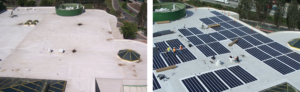
Before picture (left) showing original Hypalon roof. After (right) showing the newly installed SureCoat Roof System with solar panels installed over the top. The SureCoat Roof System reconditioned this existing roof to a “better than new” condition with a written 15-year renewable manufacturer’s warranty. This 15-year system was specifically designed to be installed under solar panels. Read more here.
Did you know that SureCoat Roof Systems are the longest-lasting roof coating solutions for commercial and industrial low-slope roofs that you can find in the USA?
Call 877-BE-SURE today to learn how SureCoat Systems can help your next commercial roof project be your BEST roof project yet!
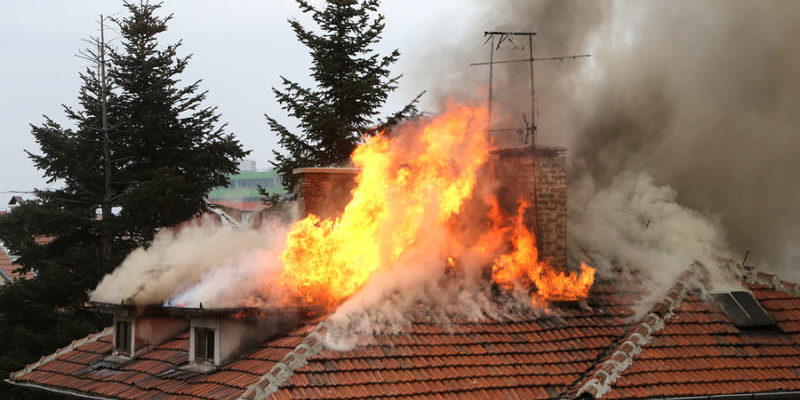
WILL YOUR ROOF SURVIVE A FIRE?
WHAT YOU NEED TO UNDERSTAND ABOUT FIRE RATINGS.
Summer is officially here. Along with all the summer fun, comes the heat and a higher potential for fires, and while it is impossible to predict exactly when and where the next fire will happen, being prepared is a must. As a roofing professional you need to ensure your roofs meet certain standards to protect the building and its occupants. In this post, we will look at what fire ratings mean, how they are assigned, and why you should understand them so that you are not fooled by confusing verbiage and marketing gimmicks.
Roof systems are rated from the highest degree of fire resistance designated as Class A; Class B being slightly inferior and Class C falling below that. It’s also worth noting that some roof assemblies are “unrated” which means they don’t meet any of the requirements of any of the above classes.
The American Society for Testing and Materials (ASTM) E108 uses methods and procedures for testing the resistance of roof coverings to fire sources outside the building on which the roof coverings are installed. This test applies to roof coverings on either combustible or noncombustible decks where the roof coverings are installed. The ratings are achieved with realistic fire tests and only apply to the actual roof coverings, not the rest of the roof components. Some building types, such as public buildings like schools or hospitals, may require a Class A rating, whereas other structures might only need to meet a B or C rating.
WHAT COMPONENTS ARE TAKEN INTO CONSIDERATION WHEN DECIDING A FIRE RATING?
The roof coating is just one component in the fire rating of a roof assembly. Other components include:
- Slope
- Substrate
- Whether the roof deck is combustible
- Type of insulation.
These factors as a whole will determine the roof system’s fire rating. Another important consideration is that the products are installed correctly and to manufacturers’ specifications.
Using products such as SureCoat and StrucSureCoat, which pass ASTM E108 and E84 for flame spread, can support your company’s efforts to meet and exceed fire requirements for most if not all of your roofing and wall projects, giving you peace of mind while saving you money on labor, material costs and allowing you to work between storms in the rainy season and working in colder weather.
The roof above was in the path of a recent 4th of July celebration. The wrong roof assembly could have potentially turned into a fire, but on this SureCoat roof, the only damage was the remnants of fireworks littering the roof. No fires here!
As an added benefit, SureCoat and StrucSureCoat have a higher reflectivity, reducing energy costs, and lowering the interior temperature in areas where office and warehouse personnel, computers or other temperature-sensitive equipment are kept.
For more information on our products’ codes and approvals call 877 823-7873 or visit Surecoatsystems.com.
Inspecting Your Roof is Not a Choice, it’s a Must.
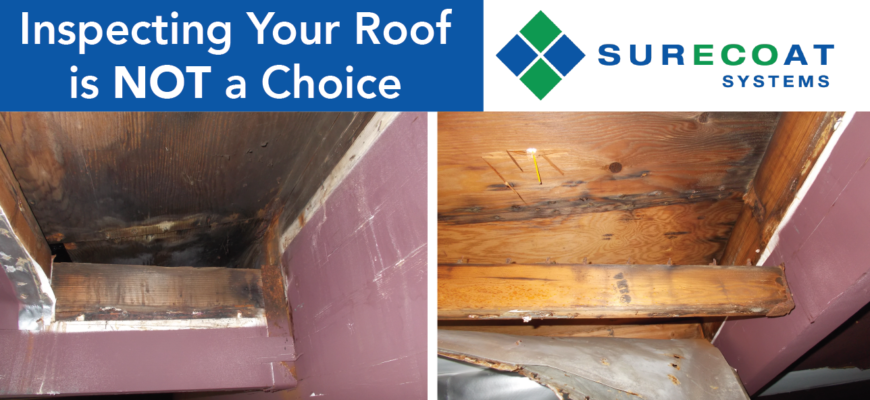
Why regular roof inspections may save you time and money
Recently we covered a few of the challenges that contractors face when working on roof repairs. In today’s blog, we go back to the very beginning- Step one: Identify damage by doing regular roof inspections.
One of the most important things about making your roof last, along with selecting the right products, is regular roof inspections. Lack of maintenance is the single largest factor leading to premature roof failures. Regular inspections can help avoid the need for untimely replacements or repairs.
If that weren’t enough, there is another BIG reason for regular inspections. This one hitting where it hurts most, your wallet. The cost of an annual roof preventative maintenance program is between 1 to 2% of the replacement value of the roof. By simply investing that small amount of the replacement cost every year, you increase the expected service life of the roof by a whopping 50 to 100%, which is just sound fiscal management.
Regular roof inspections can help you catch problems while they are still minor and easily fixed to maintain your warranty. Issues that arise from lack of maintenance can void some warranties. Inspections also allow you to take timely action or create a plan to solve the problem based on your available budget. Lastly, roof inspections can also help avoid loss or damage to secondary property such as internal or external equipment, furniture, or even having to shut down your business for a prolonged period of time because of roof major system failures.
So, whether you have mastered the “maintenance gig” with regular inspections or are just now jumping into the “maintenance wagon”, SureCoat Systems can help.
SureCoat Systems can help you assess your roof and can help create an annual report that will notify you of areas that need attention such as delaminated areas, worn waterways and areas where water ponds, cracks and splitting around new or old penetrations, blisters, parapet walls separating and failing, deteriorating caulking, equipment curbs, drains and more.
This report will also help you obtain enough information to plan a budget for future repairs to get the most out of the life of your existing roof.
Best of all, the average regular roof inspection takes approximately 45 minutes. Less than an hour of your day, can save you days or even months of headaches in the future. A roof inspection usually consists of examining the roof surface material as well as carefully assessing underlying areas of the structure such as eaves, chimneys, fasteners, and other vulnerable spots, and although building owners can spot many obviously damaged areas, a trained professional will be able to catch those issues invisible to non-roofing professionals.
So, don’t wait until there is a problem such as rain or winter storm coming your way since that will be the time when roofers are swamped with calls. It’s also the hardest time to find available products that can be applied in wet and cold conditions, and the further deterioration of existing problems can mean spending a lot more money and time than you expected on a repair. Call SureCoat Systems 877-823-7873 or click today for an Approved Contractor in your area, and get ahead of the curb to protect and prolong the life of your existing roof. Let your repairs be the start of your new roof!
How to Know What Roof Coating Protection You’re Really Getting

Episode #4 of Field Tested brings you the cold hard facts of the roof coating industry. Host Jesse Martinson shares what the roof coating industry looks like from an expert point of view and discusses the most prominent issue he sees within the industry. He talks about a recent client case study that demonstrates how the wrong product wastes time and money, and later, Jesse shares how the wrong product can impact your business and how to find the right roof coating to protect your business.
Big Three from Episode #004:
- Know what you’re buying
- Go to a products website and dig for the technical data
- Know the perm rating number the lower the better – below 1, think 0.999 or even lower
Time-stamped Show Notes:
1:03 – Jesse highlights the roof coating landscape in the industry from an expert point of view
2:51 – This is the biggest issue that the coating industry has across the country
4:28 – Jesse shares a recent warranty case study that happens way too often to many clients and contractors he works with
8:52 – How to understand what kind of roof coating you’re buying
9:49 – This is the number one thing you need to know when choosing a roof coating
13:05 – How the wrong product will impact a contracting business
Resources/Tools/Links Mentioned in This Episode:
The science behind the SureCoat Systems Product Line: https://surecoatsystems.com/the-science-behind-our-single-ply-roofing-formula/
The Eight-Step Roof Drain Repair

Discovering a leaking roof drain is just one more annoyance to add to your “to-do” list. As inconvenient as it might seem, it’s one repair item that you should move to the top of your maintenance list. A roof drain is installed on a building to convey stormwater from the roof or deck to the storm drainage sewer or run-off area. Due to the amount of wear and ponding water that occurs around roof drains and in the waterways of the roof, roof leaks are common around these drainage areas. A leaking roof drain can and will cause severe property damage if not addressed quickly and repaired.

Take a look at this roof drain pictured to the right. This is a traditional roof drain found on commercial and industrial flat and low-sloped roofs. This particular roof drain has been repaired several times with mastic and acrylic coating products. These repairs were unable to withstand the UV exposure and ponding water conditions and the roof continued to leak around the roof drain.
The SureCoat Roof System is the proven solution for stubborn roof leaks like those around a roof drain that you dread about repairing time and time again. Why is SureCoat right for this type of repair? Because it is the only true seamless single-ply roofing membrane on the market today that will allow for partial installation and small repairs like this now when they are leaving your roof most vulnerable.
Movement and ponding that will cause roof materials to dry out and elongation to be lost will not happen with SureCoat. Our roof system is made to be a monolithic material with enough elongation in extreme temperatures and weather conditions so that it won’t lose its memory, become brittle and crack.
SureCoat is also a membrane forming material. It is a fully adhered system using high-quality resins that create an extreme bond onto the existing roof and become part of it. No mastics, adhesives, sealants, or other materials are used to install a SureCoat Roof System.
SureCoat consists of only one coating product that cures into a completely seamless, self-flashing, self-adhered, 100% waterproof, cool roof membrane that never needs to be replaced because it’s renewable.
Now on to the good stuff, here’s how to repair a roof drain leak in eight simple steps.
Need help getting started with your repairs? Talk to a SureCoat Systems waterproofing specialist now! Call us at 877-8 BE SURE (7873) or email us at info@surecoatsystems.com.
RCMA Merger with the Reflective Roof Coatings Institue
RCMA Announces its Merger with the Reflective Roof Coatings Institute.
Click here for Original Press Release – 1/1/2015 by Laura Dwulet, 202/207-1119/ldwulet@roofcoatings.org

Please read the following and share with us the benefits of this organizations merge to your business in the New Year!
FOR RELEASE JANUARY 1, 2015
RCMA Announces its Merger with the Reflective Roof Coatings Institute
WASHINGTON, DC (January 1, 2015) – The Roof Coatings Manufacturers Association (RCMA) and the Reflective Roof Coatings Institute (RRCI) have merged together into one industry association which will continue to advance, promote, and expand the national and international market for roof coatings through education, outreach, technical advancement, and advocacy.
“RCMA is thrilled to merge with the Reflective Roof Coatings Institute,” said John Ferraro, RCMA Executive Director. “RRCI has been a leader on reflective roof coatings issues and we look forward to their members’ expertise within RCMA. This merger will go a long way to increase RCMA’s growth in both its membership and its recognition within the larger roofing industry.”
Bringing the two associations together will better position the roof coatings industry in the various legislative, regulatory, and building code development arenas that affect the two associations’ consolidated membership. The merger between RCMA and RRCI will result in a stronger, more unified voice for federal and state advocacy initiatives and a more robust communications and marketing program for roof coatings. In addition, the merger will result in a more detailed and comprehensive industry shipment report which will be a huge benefit to members.
RCMA has made a number of changes to its committee and task force structure, including the creation of the new RCMA Reflective Roof Coatings Institute. Through the development of technical bulletins, case studies, white papers, and research, this institute will allow RCMA to be a tremendous technical and educational resource to the industry. A strong emphasis will be placed on outreach to the end-user of coatings products, so that RCMA can ensure proper and accurate information is available for their benefit.
The RCMA Annual Meeting will be held in New Orleans, Louisiana on February 22-23, 2014, in conjunction with the International Roofing Expo. The programming, speakers, and topics featured at the RCMA Annual Meeting represent broad segments of the science, technology, and professional expertise on roof coatings. Registration for this meeting opens on January 5, and current RCMA members as well as non-members are welcome to attend.
The association will continue to be called the Roof Coatings Manufacturers Association, with the existing logo and website. For more information on RCMA activities, programs, and initiatives, please visit us at www.roofcoatings.org.
###
SHARE with us the BENEFITS of the RCMA & RRCI merge to your BUSINESS in 2015!
PVC Roof Membrane – Hospital Roof – Phase I
The SureCoat Roof System was installed over the upper level PVC roof of Albany General Hospital, a full-service hospital located in Albany, Oregon.
Albany, OR – SureCoat Systems’ Platinum Approved Contractor, Premium Roof Services, received this SureCoat Systems’ lead and restored the 15,000 square foot upper level roof on Albany General Hospital. 
When Albany General Hospital inquired to SureCoat Systems, they were in desperate need of a waterproof roofing system for their failing PVC roof that held significant amounts of ponding water due to age and design.

PVC roof of Albany General Hospital before the SureCoat Roofing and Waterproofing System

PVC roof of Albany General Hospital before the SureCoat Roofing and Waterproofing System
Prior to the installation of the SureCoat Roof System, the Albany Hospital had other contractors attempt to repair this aged roof. The roof consisted of an exposed PVC roof membrane that was installed over a built-up roof with foam insulation and a metal roof deck substrate.
Albany General Hospital recently completed an upper floor remodel. The complete upper floor is home to the birthing/delivery and neo-natal section of the hospital (new babies and moms), and is VERY sensitive to ANY kind of activity. The condition of the roof had multiple leaks at various locations, and at this point the nurses on duty were used to ceiling tiles coming down in random places. In the worst of weather, water would run down the outside walls of patients’ rooms, forcing the hospital to close them and lose bed space. This year, they knew that something needed to be done, but they also knew that a complete removal of the old system would force them to completely shut down the top floor of the hospital due to the sensitive nature of the patients cared for at this corridor. Complete removal of the existing roof system would expose the metal decking, potentially turning the hospital into a construction site. The hospital would be fully exposed under these circumstances.
The VERY BEST that could have been done under these conditions would have involved closing entire sections of the top floor at a time as the construction work progressed. Proposals from previous roofing companies outlined this as their only option. Further concerns with creating a construction site at the hospital was that every air handler and HVAC unit providing service to the hospital, including the Surgery Center, are on this roof requiring acute care be taken to avoid DUST, FUMES and DEBRIS from penetrating the building.

The SureCoat Roof System installed by Premium Roof Services located Bend, Oregon over Albany General Hospital.
Problems with their existing roof were leaks at multiple locations that were very difficult to trace and track back to point of entry due to the roof configuration of multiple layers, insulation and fluted metal deck substrate. Details and installation techniques on the PVC roofing membrane were poor; many of the pipe penetrations were sealed with only a bead of caulking. There were heat-welded seam failures throughout the roof at multiple locations. Puncture holes were very prolific, from years of foot traffic in servicing the HVAC units, vibrational movement of the roof-mount equipment and thermal cycling. In addition, wind damage to walk pads created further failures including holes in many locations of the roof. Degradation of spray foam due to water intrusion had created a condition of nearly zero slopes to roof drains. The roof ponds ½” or more at all times during the rainy season leaving options limited to a complete tear-off and redesign or a restoration system unaffected by year-round ponding water.
The SureCoat Roof System installed by Premium Roof Services located Bend, Oregon over Albany General Hospital.
Multiple attempts to stop leaks and maintain the roof were performed over the years. Contractors and maintenance crews tried everything from caulking to TPO patches, even peel and stick roofing patches. All prior attempts had failed as nothing would stick to the existing single-ply PVC roof membrane. Several attempts were made to incorporate TPO overlay patches in larger areas with caulking as a seam-sealer and at the tie-ins. These caulking patches peeled off within a few years. Again, curbs and field seams leaked. Further maintenance attempts were performed again using peel and stick patches with Elastobond. Most patches did not adhere, but in some areas, those that did show adhesion only managed to hide evidence of membrane damage caused by saturation.

The SureCoat Roof System installed by Premium Roof Services located Bend, Oregon over Albany General Hospital.
The hospital facility’s staff discovered SureCoat Systems during their research and investigation of a good fit for their problem. Through their research, they were seeking a solution for the following:
- How could they refurbish the roof surface without creating a construction site or mess involved with removing the old roofing materials?
- Accessibility; Albany General Hospital is an older building with several smaller buildings confined together, restricting space. Taking up the hospital’s parking areas with cranes, dumpsters, scaffolding and debris chutes were not something the hospital was in favor of as caring for patients is the hospital’s sole purpose.
- It was not possible to shut down vital services to the hospital; i.e. heating and air conditioning.
- The roofing construction could have ZERO effect to the top corridor services; birthing and neonatal. There was no room for error negotiation on this point. The operations of this corridor could not be exposed to any fumes, dust or debris.
- The hospital wanted a roof warranty that covered them under ponding water conditions, rather than a new roof that excluded it.
“Midway through the project, after the initial polyester and first coat, we had several rain storms. The semi-completed system held and we did not have any leaks! I have been in the roofing industry for over 25 years, and have seen and used many coating products. This was our first project using the SureCoat roof restoration system. This project involved a large number of details, and suffered from extreme ponding at multiple locations. Logistics and building use issues made removal of existing systems, and installation of any other type of system, next to impossible.” Eric Keithcart – Premium Roof Services, Bend, OR
Cool Roofs in Summer Heat
FOR IMMEDIATE RELEASE
Date: August 29, 2014
Contact: Jamie Barnett, 877-823-7873, jamie@surecoatsystems.com
Throughout the Western United States, cool roofs are used to reduce energy costs, prolong the life of traditional roofs and lower roof maintenance costs.
Anaheim, CA – Are you interested in reducing your energy costs? Do you want to extend the life of your roof and save thousands over a tear-off and the “unknown factor” once your roof is removed? Then you want a cool roof.
COOL ROOFS IN SUMMER HEAT
All over the globe, throughout the Western United States and especially in the Mid-West, cool roofs are used to reduce energy costs, prolong the life of traditional roof systems and lower roofing maintenance costs.
Cool roofs have proven to save on energy costs, especially cooling costs in the hot summer months. But not all cool roofs are created equal. Be careful not to flush your energy saving investment down the “roof drain”. Manufacturers of acrylic roof coatings and silver or aluminum roof coatings DO NOT recommend these products be installed over low-slope roofs with ponding water (water that sits 48 hours after rain). If you are a commercial property owner or commercial roofing contractor, you know that all roofs pond water to some degree. Most commonly these ponding areas are in the drains and waterways and more commonly than not, throughout the field of the roof. Look at the figures below and think about this… How long will your “cool roof” remain a “cool roof”?
Typically installed over an emulsion and fiber reinforced base coat, the waterproofing portion of this type of roof restoration system, acrylic cool roof coatings and reflective aluminum coatings just don’t hold up to moisture and UV. These types of roof coatings can only reflect the UV while they are on the roof. Once they peel, crack and lift, you are left with a hot, heat-absorbing black roof that does not contain any UV resistance. 
The photos show typical results  of acrylic roof coatings, even those used in conjunction with a waterproofing emulsion base coat. The roofs displayed in the photos above were only 6 months to 3 years old at the time the photos were taken. The manufacturers of these coatings specifically state in their installation specification, “not to use in areas where water ponds”.
This information was either not passed along to the contractor or ignored by the installing contractor. These emulsion and acrylic roof systems are inexpensive because the materials are inexpensive. However these systems are far from free. The majority of the costs for these types of roofing systems are the labor costs. These systems are not designed to be sustainable cool roofs. Once the white coating or silver coating peels away, the cool roof and all its energy saving, heat emitting values are completely lost.
The warranty on these roofing materials claim the roof will be leak free for a period of time but not a cool roof for any period of time. The black emulsion is the waterproofing, not the white acrylic. The reflective acrylic coatings always peel up on commercial low-slope roofs and industrial flat roofs, exposing the emulsion waterproofing. The Ultra-Violet (UV) and thermal protective membrane is gone and the roof is no longer a cool roof.
The upside: The SureCoat Roof System is a completely seamless, renewable and sustainable cool roof membrane. A SureCoat Roof will remain a waterproof roof as well as a cool roof for the entire life of the warranty. SureCoat Systems manufacturer’s written material warranty states that “The SureCoat Roof System will not leak due to ordinary ponding water caused by natural precipitation”.
Since the SureCoat Roof is a solid core of a single material, as the roof wears, the heat emitting thermal values and UV reflective values remain throughout the life cycle of the roof. When a SureCoat Roof becomes dirty, a simple cleaning with SureSkrub, a biodegradable cleaner, will turn a SureCoat Roof bright white again which will recapture nearly all the initial reflectivity. You cannot scrub any other coating system without it lifting as shown in the pictures below.
The thermal heat emitting values of a SureCoat roof always remain exceedingly high at 93%, creating a Solar Reflective Index (SRI) of 102 after aged and dirty. SureCoat was engineered for large commercial low-slope roofs and large industrial flat roofs that pond water, as all large low-slope roofs pond to some degree.
DON’T LET THIS HAPPEN TO YOU… PROTECT YOUR ASSETS AND YOUR INVESTMENT WITH A PRODUCT THAT YOU ARE SURE ABOUT. FIELD TESTED AND MOTHER NATURE APPROVED!