
WILL YOUR ROOF SURVIVE A FIRE?
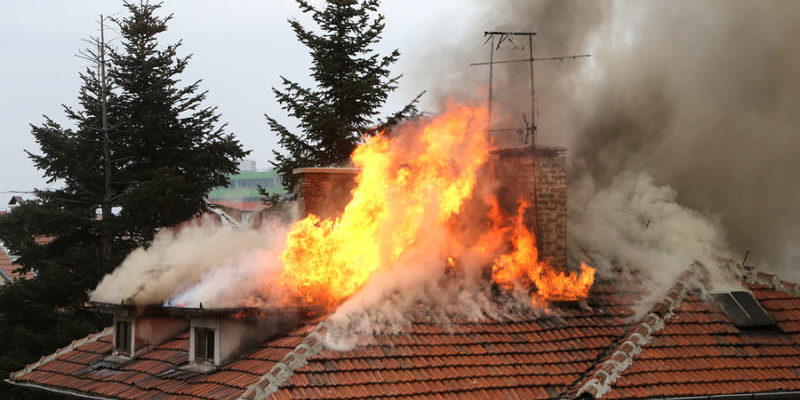
WHAT YOU NEED TO UNDERSTAND ABOUT FIRE RATINGS.
Summer is officially here. Along with all the summer fun, comes the heat and a higher potential for fires, and while it is impossible to predict exactly when and where the next fire will happen, being prepared is a must. As a roofing professional you need to ensure your roofs meet certain standards to protect the building and its occupants. In this post, we will look at what fire ratings mean, how they are assigned, and why you should understand them so that you are not fooled by confusing verbiage and marketing gimmicks.
Roof systems are rated from the highest degree of fire resistance designated as Class A; Class B being slightly inferior and Class C falling below that. It’s also worth noting that some roof assemblies are “unrated” which means they don’t meet any of the requirements of any of the above classes.
The American Society for Testing and Materials (ASTM) E108 uses methods and procedures for testing the resistance of roof coverings to fire sources outside the building on which the roof coverings are installed. This test applies to roof coverings on either combustible or noncombustible decks where the roof coverings are installed. The ratings are achieved with realistic fire tests and only apply to the actual roof coverings, not the rest of the roof components. Some building types, such as public buildings like schools or hospitals, may require a Class A rating, whereas other structures might only need to meet a B or C rating.
WHAT COMPONENTS ARE TAKEN INTO CONSIDERATION WHEN DECIDING A FIRE RATING?
The roof coating is just one component in the fire rating of a roof assembly. Other components include:
- Slope
- Substrate
- Whether the roof deck is combustible
- Type of insulation.
These factors as a whole will determine the roof system’s fire rating. Another important consideration is that the products are installed correctly and to manufacturers’ specifications.
Using products such as SureCoat and StrucSureCoat, which pass ASTM E108 and E84 for flame spread, can support your company’s efforts to meet and exceed fire requirements for most if not all of your roofing and wall projects, giving you peace of mind while saving you money on labor, material costs and allowing you to work between storms in the rainy season and working in colder weather.
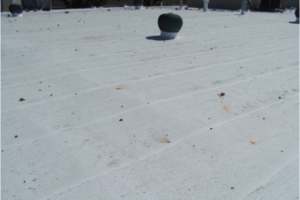
The roof above was in the path of a recent 4th of July celebration. The wrong roof assembly could have potentially turned into a fire, but on this SureCoat roof, the only damage was the remnants of fireworks littering the roof. No fires here!
As an added benefit, SureCoat and StrucSureCoat have a higher reflectivity, reducing energy costs, and lowering the interior temperature in areas where office and warehouse personnel, computers or other temperature-sensitive equipment are kept.
For more information on our products’ codes and approvals call 877 823-7873 or visit Surecoatsystems.com.
Underground Concrete Sump Waterproofed on Fire Training Tower in the City of Downey

FOR IMMEDIATE RELEASE
Date: October 31, 2014
Contact: Jamie Barnett, 877/823-7873, jamie@surecoatsystems.com
It may seem a little SPOOKY to you, but we are not SCARED! The SureCoat Roof System was installed as a waterproofing protection and prevention system to the underground sump of the Fire Training Tower for the City of Downey.
Downey, California – The SureCoat Roof System was used by local approved contractor, JemStar Construction, to waterproof the underground water holding sump and the inside walls for the City of Downey’s Fire Training Tower. The city’s main concern was to keep water from permeating through the water containing sump and into the surrounding ground.

Fire Training Tower in the city of Downey, California, USA.
This was not the City of Downey’s first attempt to eradicate this issue. The sump of this concrete tower had hairline cracks that were allowing for water seepage through all sides of the walls. The products previously used as an attempt to stop the issue failed.
Other cities have this same problem with their fire training towers. Some are so bad that the water intrusion into the ground has caused erosion to the point that the fire training towers are leaning. This water erosion has caused the surrounding ground to become unstable and unable to support the tower any longer in this condition. The training towers that have reached to this point must undergo more major construction to restabilize the ground before waterproofing the sump and putting the training towers back in service.

Water Holding Sump BEFORE the SureCoat Roof System
SureSkrub, SureCoat and Poly-Mesh create the SureCoat Roof System. This same waterproof roof system has been tested and proven TRUE for other uses as well. Contractors have experimented with various uses of SureCoat and invented new solutions using this same Field Tested and proven waterproofing system.

Underground concrete holding walls and sump waterproofed with the SureCoat Roof System.
The SureCoat Roof System has been used for containment systems, walls and decking in addition to flat roofs and low-sloped roofs. This SureCoat Systems’ Approved Contractor used their SureCoat roofing experience for this unique waterproofing solution.
Do you have a SureCoat waterproofing story that you want to tell us about? Share it with us and we’ll share it with everyone!
About the Product: The SCRS is flexible enough to bridge cracks, withstand the expansion and contraction caused by movement, vibration and thermal cycling, and retain its tightly cross-linked molecular structure; remaining waterproof, UV stable and energy efficient. “One Bucket, Thousands of Uses”, Download the brochure today.
Don’t be AFRAID to try the SCRS for your specialty project today. If you’re not SURE, CALL and SPEAK with a Product Specialist today at 877-823-7873.
Air Quality Monitoring Station – Restored vs. Replaced in Anaheim, California
FOR IMMEDIATE RELEASE
Date: October 28, 2014
Contact: Jamie Barnett, 877-823-7873, info@surecoatsystems.com
Contractor: JemStar Construction Services
Anaheim, CA – The South CoastAQMD facilitates air quality monitoring stations throughout Southern California. Most look like this storage container. These off-site offices hold weather sensitive air quality monitoring equipment and computers. These offices are always active and occupied intermittently for monitoring and testing of air quality and gathering data for testing. This expensive, high-tech machinery must be protected from heat as well as water.

Air Quality Monitoring Station located in Orange County, California – USA.

Air Quality Monitoring Station located in Orange County, California – USA.

Air Quality Monitoring Station located in Orange County, California – USA.
This air quality monitoring station and four others have been restored over the last year using SureCoat and a SureCoat Approved Contractor. These containers were covered in rust because standard paints and coatings used in the past were unable to stop the oxidation process that leads to rusting. You can see from the picture that the rust bled through the paint as it continued to degrade the metal.
Metal roofs and containers are extruded and anodized or painted at the factory before they are installed in the field. The baked on coatings have not provided any energy-saving benefit in the past. Most worn metal roofs have been neglected to the point that rust is evident. There will be missing fasteners that have come loose through the thermal cycling process and popped off. Beyond the surface rust, there are often holes in the metal where the roof has rusted through. Often these roofs are not attended to until there is a leak and multiple issues present.
Regular exterior paint and acrylic roof coatings cannot hold up to the constant thermal cycling, heat, UV radiation exposure. In addition, the preparation work required to paint metal is extensive and often includes primer coats, rust inhibitors, and several topcoats. All the work the contractor is required to do will not add any integrity to these paints and coatings. The oxidation process that causes rust is not stopped because water can still reach the metal as moisture permeates through paints and acrylic coatings. Rust will appear from under the paint or coating proving the degradation of the metal has continued.
In addition, sheet metal used to make HVAC duct work and plenums will also rust if left unprotected. HVAC duct seams, roof jacks and other metal flashings are often sealed with black and gray mastics. These mastics absorb heat, become brittle and split in a short period of time and need constant maintenance to keep the seal watertight.
The SureCoat Roof System coating material is an excellent product to seal metal seams and to protect sheet metal from rust. The elastomeric, monolithic, waterproof membrane adheres to all types of metals including factory coated metal, galvanized, bonderized, mild steel, sheet metal and aluminum. The SureCoat Roof System forms an elastomeric, seamless, protective, waterproof membrane over the roof field that moves with thermal cycles.
Without water and air, the oxidation process is interrupted so rust no longer forms on the metal.
Exposed duct runs can be sealed to keep the heated or cool air from escaping through the seams. SureCoat Roof System material emits 93% of the heat which will keep cold air from heating up as it passes through the ducts in the summer for better efficiency and lower cooling costs. The lowered demand on the HVAC system may help to extend the life of the equipment.
SureCoat is Field-Tested™ and Proven to be the most effective metal restoration coating available for commercial, industrial, manufacturing, storage and maintenance over metal.
PVC Roof Membrane – Hospital Roof – Phase I
The SureCoat Roof System was installed over the upper level PVC roof of Albany General Hospital, a full-service hospital located in Albany, Oregon.
Albany, OR – SureCoat Systems’ Platinum Approved Contractor, Premium Roof Services, received this SureCoat Systems’ lead and restored the 15,000 square foot upper level roof on Albany General Hospital. 
When Albany General Hospital inquired to SureCoat Systems, they were in desperate need of a waterproof roofing system for their failing PVC roof that held significant amounts of ponding water due to age and design.

PVC roof of Albany General Hospital before the SureCoat Roofing and Waterproofing System

PVC roof of Albany General Hospital before the SureCoat Roofing and Waterproofing System
Prior to the installation of the SureCoat Roof System, the Albany Hospital had other contractors attempt to repair this aged roof. The roof consisted of an exposed PVC roof membrane that was installed over a built-up roof with foam insulation and a metal roof deck substrate.
Albany General Hospital recently completed an upper floor remodel. The complete upper floor is home to the birthing/delivery and neo-natal section of the hospital (new babies and moms), and is VERY sensitive to ANY kind of activity. The condition of the roof had multiple leaks at various locations, and at this point the nurses on duty were used to ceiling tiles coming down in random places. In the worst of weather, water would run down the outside walls of patients’ rooms, forcing the hospital to close them and lose bed space. This year, they knew that something needed to be done, but they also knew that a complete removal of the old system would force them to completely shut down the top floor of the hospital due to the sensitive nature of the patients cared for at this corridor. Complete removal of the existing roof system would expose the metal decking, potentially turning the hospital into a construction site. The hospital would be fully exposed under these circumstances.
The VERY BEST that could have been done under these conditions would have involved closing entire sections of the top floor at a time as the construction work progressed. Proposals from previous roofing companies outlined this as their only option. Further concerns with creating a construction site at the hospital was that every air handler and HVAC unit providing service to the hospital, including the Surgery Center, are on this roof requiring acute care be taken to avoid DUST, FUMES and DEBRIS from penetrating the building.

The SureCoat Roof System installed by Premium Roof Services located Bend, Oregon over Albany General Hospital.
Problems with their existing roof were leaks at multiple locations that were very difficult to trace and track back to point of entry due to the roof configuration of multiple layers, insulation and fluted metal deck substrate. Details and installation techniques on the PVC roofing membrane were poor; many of the pipe penetrations were sealed with only a bead of caulking. There were heat-welded seam failures throughout the roof at multiple locations. Puncture holes were very prolific, from years of foot traffic in servicing the HVAC units, vibrational movement of the roof-mount equipment and thermal cycling. In addition, wind damage to walk pads created further failures including holes in many locations of the roof. Degradation of spray foam due to water intrusion had created a condition of nearly zero slopes to roof drains. The roof ponds ½” or more at all times during the rainy season leaving options limited to a complete tear-off and redesign or a restoration system unaffected by year-round ponding water.
The SureCoat Roof System installed by Premium Roof Services located Bend, Oregon over Albany General Hospital.
Multiple attempts to stop leaks and maintain the roof were performed over the years. Contractors and maintenance crews tried everything from caulking to TPO patches, even peel and stick roofing patches. All prior attempts had failed as nothing would stick to the existing single-ply PVC roof membrane. Several attempts were made to incorporate TPO overlay patches in larger areas with caulking as a seam-sealer and at the tie-ins. These caulking patches peeled off within a few years. Again, curbs and field seams leaked. Further maintenance attempts were performed again using peel and stick patches with Elastobond. Most patches did not adhere, but in some areas, those that did show adhesion only managed to hide evidence of membrane damage caused by saturation.

The SureCoat Roof System installed by Premium Roof Services located Bend, Oregon over Albany General Hospital.
The hospital facility’s staff discovered SureCoat Systems during their research and investigation of a good fit for their problem. Through their research, they were seeking a solution for the following:
- How could they refurbish the roof surface without creating a construction site or mess involved with removing the old roofing materials?
- Accessibility; Albany General Hospital is an older building with several smaller buildings confined together, restricting space. Taking up the hospital’s parking areas with cranes, dumpsters, scaffolding and debris chutes were not something the hospital was in favor of as caring for patients is the hospital’s sole purpose.
- It was not possible to shut down vital services to the hospital; i.e. heating and air conditioning.
- The roofing construction could have ZERO effect to the top corridor services; birthing and neonatal. There was no room for error negotiation on this point. The operations of this corridor could not be exposed to any fumes, dust or debris.
- The hospital wanted a roof warranty that covered them under ponding water conditions, rather than a new roof that excluded it.
“Midway through the project, after the initial polyester and first coat, we had several rain storms. The semi-completed system held and we did not have any leaks! I have been in the roofing industry for over 25 years, and have seen and used many coating products. This was our first project using the SureCoat roof restoration system. This project involved a large number of details, and suffered from extreme ponding at multiple locations. Logistics and building use issues made removal of existing systems, and installation of any other type of system, next to impossible.” Eric Keithcart – Premium Roof Services, Bend, OR
Cool Roofs in Summer Heat
FOR IMMEDIATE RELEASE
Date: August 29, 2014
Contact: Jamie Barnett, 877-823-7873, jamie@surecoatsystems.com
Throughout the Western United States, cool roofs are used to reduce energy costs, prolong the life of traditional roofs and lower roof maintenance costs.
Anaheim, CA – Are you interested in reducing your energy costs? Do you want to extend the life of your roof and save thousands over a tear-off and the “unknown factor” once your roof is removed? Then you want a cool roof.
COOL ROOFS IN SUMMER HEAT
All over the globe, throughout the Western United States and especially in the Mid-West, cool roofs are used to reduce energy costs, prolong the life of traditional roof systems and lower roofing maintenance costs.
Cool roofs have proven to save on energy costs, especially cooling costs in the hot summer months. But not all cool roofs are created equal. Be careful not to flush your energy saving investment down the “roof drain”. Manufacturers of acrylic roof coatings and silver or aluminum roof coatings DO NOT recommend these products be installed over low-slope roofs with ponding water (water that sits 48 hours after rain). If you are a commercial property owner or commercial roofing contractor, you know that all roofs pond water to some degree. Most commonly these ponding areas are in the drains and waterways and more commonly than not, throughout the field of the roof. Look at the figures below and think about this… How long will your “cool roof” remain a “cool roof”?
Typically installed over an emulsion and fiber reinforced base coat, the waterproofing portion of this type of roof restoration system, acrylic cool roof coatings and reflective aluminum coatings just don’t hold up to moisture and UV. These types of roof coatings can only reflect the UV while they are on the roof. Once they peel, crack and lift, you are left with a hot, heat-absorbing black roof that does not contain any UV resistance. 
The photos show typical results  of acrylic roof coatings, even those used in conjunction with a waterproofing emulsion base coat. The roofs displayed in the photos above were only 6 months to 3 years old at the time the photos were taken. The manufacturers of these coatings specifically state in their installation specification, “not to use in areas where water ponds”.
This information was either not passed along to the contractor or ignored by the installing contractor. These emulsion and acrylic roof systems are inexpensive because the materials are inexpensive. However these systems are far from free. The majority of the costs for these types of roofing systems are the labor costs. These systems are not designed to be sustainable cool roofs. Once the white coating or silver coating peels away, the cool roof and all its energy saving, heat emitting values are completely lost.
The warranty on these roofing materials claim the roof will be leak free for a period of time but not a cool roof for any period of time. The black emulsion is the waterproofing, not the white acrylic. The reflective acrylic coatings always peel up on commercial low-slope roofs and industrial flat roofs, exposing the emulsion waterproofing. The Ultra-Violet (UV) and thermal protective membrane is gone and the roof is no longer a cool roof.
The upside: The SureCoat Roof System is a completely seamless, renewable and sustainable cool roof membrane. A SureCoat Roof will remain a waterproof roof as well as a cool roof for the entire life of the warranty. SureCoat Systems manufacturer’s written material warranty states that “The SureCoat Roof System will not leak due to ordinary ponding water caused by natural precipitation”.
Since the SureCoat Roof is a solid core of a single material, as the roof wears, the heat emitting thermal values and UV reflective values remain throughout the life cycle of the roof. When a SureCoat Roof becomes dirty, a simple cleaning with SureSkrub, a biodegradable cleaner, will turn a SureCoat Roof bright white again which will recapture nearly all the initial reflectivity. You cannot scrub any other coating system without it lifting as shown in the pictures below.
The thermal heat emitting values of a SureCoat roof always remain exceedingly high at 93%, creating a Solar Reflective Index (SRI) of 102 after aged and dirty. SureCoat was engineered for large commercial low-slope roofs and large industrial flat roofs that pond water, as all large low-slope roofs pond to some degree.
DON’T LET THIS HAPPEN TO YOU… PROTECT YOUR ASSETS AND YOUR INVESTMENT WITH A PRODUCT THAT YOU ARE SURE ABOUT. FIELD TESTED AND MOTHER NATURE APPROVED!

Hail Damage to Single-ply Roofs
FOR IMMEDIATE RELEASE
Date: August 5, 2014
Contact: Jamie Barnett, 877-823-7873, jamie@surecoatsystems.com
Hail damage undetected in well formulated single-ply roof membranes in parts of the Western United States.
In a recent bulletin published by WSRCA, a Linked In professional group of Roofing Contractors, preliminary reports of latent hail damage went undetected for months and in some cases, years in certain thermoplastic single-ply membranes.

Harsh climates with extreme temperature variance cause single-ply roofing membranes, specifically PVC and TPO, to deteriorate at a more accelerated rate than the same roofing material performs in other climates with less extreme weather. Unfortunately, these weathered single-ply roofs are more vulnerable to damage caused by hail impact.
Latent hail damage is often undetected until further damage has begun to manifest, causing roof leaks, roof failures and roof substrate damage. This type of hail damage is the unseen damage created by the initial impact of hail. Left unprotected through prolonged periods of time, latent hail damage can result in the need for a roof tear-off or re-roof and roofing substrate repairs.
Much of the Western US is affected by hail storms. If you are a property owner in an area commonly affected by hail, you know just how costly and inconvenient hail damage can be to your building and even your daily business operations. The cost and inconvenience to have your roof and roofing substrate replaced due to hail damage takes this inconvenience to another level with a potential closing of the business, damaged assets or loss of tenants. Property owners and insurance companies in this part of the country know that they cannot avoid Mother Nature. What many of them are discovering now is a product that can stand up to good ol’ Mother Nature herself!
The SureCoat Roof System can be used to repair all levels of hail damage on metal roofs, asphalt shingles, built-up roofs, SPF, PVC, TPO, EPDM, Hypalon and other single-ply membranes The SureCoat Roof System has a perfected elongation of 400% and sustains an elongation of 160% at freezing. The SureCoat Roof System has an advanced tensile strength of 2800 psi. ASTM weathered testing results did not show any signs of cracking, splitting, separation or rupture when under examination; magnified 10 times through ASTM hail resistance testing which meets or exceeds FM standards.
What this means for property owners and insurance companies: Future hail damage to a SureCoat Roof is rare. In the event that there was future damage or future penetrations made to an existing SureCoat roof, the repairs would be a minimal cost with minimal labor. The continuous bonding properties and cross-linked nature of SureCoat creates a waterproof, monolithic seal that is self-adhered and self-flashing. A SureCoat roof repair melts into the existing SureCoat Roof becoming a part of it, without leaving a cold-joint.
###
Spring Time Roof Maintenance and Repairs
Prove to your clients that you really STOP ROOF LEAKS FOR INDUSTRIAL AND COMMERCIAL ROOFS and they will return to you for a Complete Restoration System when their roof budgets are put in place.
Reinforced repairs made with SureCoat roof coating systems have proven to last 10 years. Best of all, repairs done by an Approved Contractor can be integrated into a fully warranted system one piece at a time, as your customer’s budget allows for it.

Roof leaks often occur at roof penetrations, around roof mount air conditioning units and HVAC ducts or at skylights and waterways. Roof leaks on flat roofs and low slope roofs are typically caused by splits, cracks, and tears at roof seams or checking in the field of roofs that have often times been previously treated with low grade coatings such as mastic, tar or acrylic coatings.
By using the SureCoat Roof Extender System to seal penetrations, repair drain and scupper areas, recondition waterways and ponding areas, even seal skylights, HVAC ducts, plenums, and more, you can save your customer THOUSAND$!
SureCoat Systems’ Roof Extender system is compatible with all types of flat roofs and low slope roofs including EPDM, Rubber, PVC, TPO and other types Single Ply roofs, BUR, SPF Foam, Metal roofs and more. Rather than wasting your customers repair dollars, why not offer them a sustainable roof repair?
The SureCoat Roof Extender can be applied as a partial repair system for use in waterways, and drains, for ponding areas, HVAC curbs, ducts, plenums, penetrations and skylights. This partial system then gives your customers a future option to complete the reconditioning system and obtain a warranty for their roof. This is the same warranty offered for the SureCoat Roof System, renewable for the life of the building to which it is applied.
SureCoat roof coating is a UV Stable, liquid seamless single ply that is waterproof and will protect your roof for life. The SureCoat Roof System is engineered with only the highest grade resins and polymers for a perfected waterproof, hybrid coating solution for commercial and industrial flat roofs and low-sloped roofs. Our unique cross-linked chemistry and continuous bonding properties, make the SureCoat Roof System the ONLY roof coating system that can be used as a partial roof system now and later be integrated into a fully warranted roof system that warrants coverage in areas of ponding water.
Contact us today about how this system will make you a hero to your customers! 877-823-7873
How to Sell More Roofs in 2014

3 Things Every Roofer Should be Doing in 2014
Do you want to sell more commercial and industrial roofing projects this year? We want to help you grow the commercial roofing and industrial roofing side of your business in 2014!
Every business faces obstacles. It is up to you to re-evaluate, refocus and reshape your business plan to succeed this year!
Just the simplest 3-step-plan can drive sales to another level for you in 2014. So, read on and think about the changes that you need to make for a better bottom line this year. Roofers and Roofing Contractors, we are talking to you!
We are asking you to stop for a moment to re-evaluate your approach for what you are trying to accomplish. Are you going after the relationship, the repeat customer, or maybe you desire to do more school roofing projects or school housing roofs?
For example, SureCoat Systems sells solutions. We help to develop many of the waterproof coatings that we then distribute throughout the USA and internationally for the complete building envelope. Based on their research for solutions building owners call us for their water intrusion problems after others have failed. We serve those with concrete, metal, wood, single ply, stucco and all types of flat roofing problems. Here at SureCoat Systems, through education and field testing, we solve problems that have been ignored by the industry for decades.
This is a great time to reflect on your accomplishments in 2013 before making any changes to your New Year’s Business Plan. There is no better time than now to put your forethought ideas to rest and precede the competition in your area!
1. Evaluate your current business model. Break it down and look at it. Become aware of what you have been doing until now; identify any weakness in it. Is there a procedure in place to keep leads from falling through the cracks or from missing follow-ups? What has not been working and needs to go this year?
2. Identify what has worked in your current plan. Research it and see if anything is changing that will affect what you have been doing until now. Social media is an ever-changing example of this. We went from optimizing our search-engine ranking with keywords on our website to using hash tags in social media posts. Do you even know what a hash tag is?
3. Talk about it! Reach out to others. Ask other professionals in your field what they are doing. Ask what is working and what’s not. Social media is a great place for this. Linked in, Google, Facebook and Word Press are all great places to start. Look for a page, group or forum where others are discussing construction, waterproofing or roofing. You may be surprised at how much we are able to help each other without ever meeting. This is a win-win for everyone! With all the blogging and social sites available at your fingertips these days, your resources are unlimited.
What is your vision for your company? What are your goals this year? What is working for you?
We want to hear from you! Contact us at info@surecoatsystems.com
SureCoat Saves School District Thousands
Remember this post from last summer? Oak Ridge High School… Well since this post the school has done several of their portables at the same location in the same cool roof color. See photos below and read the story if you have not seen it yet.

PROJECT OF THE MONTH – Oak Ridge High School, El Dorado, California
This huge high school complex in the El Dorado School District was plagued with deteriorating roof paint. After repeated re-painting, with the last attempt failing in as little as 10 months, their roof consultant recommended the SureCoat Roof System.

Before SureCoat – standard paint that cracks chips and peels.
DC Consulting and El Dorado School District choose a SureCoat Roof System to provide cool roofs with a renewable warranty over their 14 metal buildings located at Oak Ridge High School. The SureCoat Roof System was installed in their own chosen color (not bright white) over various types of metal roofs. This was very important to the school district as the hillside community did not like the glare of the original white roofs and supported changing the color with the new modernization project. SureCoat was the solution that this school was looking for to achieve the energy savings and cool roof properties they desired in a colored roof coating.

After the SureCoat System application
Please note the photo reminds us of how much cooler the project will be with SureCoat protecting it.
Roofing Consultant: DC Consulting
General Contractor: Carter Kelly Construction
Doug Hamilton at DC Consulting states that he wishes he had known about SureCoat sooner, as his clients have experienced several different failures with other coating products. The most recent being a several thousand dollar trial test over one metal roof with a ‘high quality” colored roof coating prior to the application of the SureCoat Roof System. Although the coating had a warranty of one year, not long at all, it failed completely by chipping, cracking and peeling after only 10 months.
Doug, being involved in the roof industry for decades, was excited to learn that there was finally a roof coating made especially for the flat roof and all of its inherent flaws. More intriguing was that the SureCoat Roof System had a manufacturer’s written warranty that stated the roof would not leak due to ordinary ponding water. Oakridge High School is a beautiful school in a peaceful country-like setting where the tan roofs now blend into the landscape. The next time the school district will have to consider investing any money into these roofs again is in 15 years, when they will be simply cleaned and top coated and their SureCoat warranty renewed for an additional 15 years. SureCoat is a top-of-the-line hybrid coating that retains its quality and displays its performance when put to the test!
Los Angeles Restaurant
Featured Project of the Month
Coating restoration of a restaurant roof in Los Angeles, California
Now a Tierra Mia, this former KFC restaurant roof was in horrible shape. The roof was covered in grease and had dozens of leaks throughout the entire roof field, at the anchors, seams, penetrations and parapet walls. Short of a complete tear off, The SureCoat Roof System was the only solution. A tear off would mean that their store build out would have to come to a halt. In order to tear off this new coffee houses’ roof they would have to completely remove the roof mount equipment, remove and dispose of old materials, re-install the new roof system in several stages and re-install all roof mount equipment again.
It was important to Tierra Mia owner, Ulysses, to have his roof in good operating condition not only because this was his new location, but it was important for his investment to be protected as well. Thousands of dollars were spent already on renovations, decorations, and furniture to produce the perfect Latin American Coffee Experience.
Alden management has used JEMSTAR Construction to recondition many of their properties roofs with a SureCoat Roof System. Based on their great experiences with JEMSTAR Construction and The SureCoat Roof System, property manager Bob Simpson, and owner of 9220 Slauson Avenue, agreed on a SureCoat renewable roof system. The SureCoat Roof System saved them a lot of time and money vs. an old-school tear off.
If you have heard yet, Tierra Mia is a high quality coffee roaster and retailer with locations throughout Los Angeles, California. You can recognize the newest Tierra Mia Coffee Shop by the giant coffee mug that comes into view driving down Slauson Avenue in Pico River – Southern California.