WILL YOUR ROOF SURVIVE A FIRE?
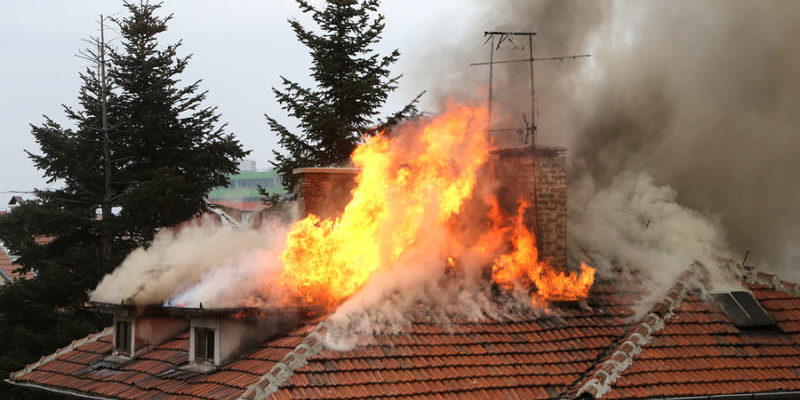
WHAT YOU NEED TO UNDERSTAND ABOUT FIRE RATINGS.
Summer is officially here. Along with all the summer fun, comes the heat and a higher potential for fires, and while it is impossible to predict exactly when and where the next fire will happen, being prepared is a must. As a roofing professional you need to ensure your roofs meet certain standards to protect the building and its occupants. In this post, we will look at what fire ratings mean, how they are assigned, and why you should understand them so that you are not fooled by confusing verbiage and marketing gimmicks.
Roof systems are rated from the highest degree of fire resistance designated as Class A; Class B being slightly inferior and Class C falling below that. It’s also worth noting that some roof assemblies are “unrated” which means they don’t meet any of the requirements of any of the above classes.
The American Society for Testing and Materials (ASTM) E108 uses methods and procedures for testing the resistance of roof coverings to fire sources outside the building on which the roof coverings are installed. This test applies to roof coverings on either combustible or noncombustible decks where the roof coverings are installed. The ratings are achieved with realistic fire tests and only apply to the actual roof coverings, not the rest of the roof components. Some building types, such as public buildings like schools or hospitals, may require a Class A rating, whereas other structures might only need to meet a B or C rating.
WHAT COMPONENTS ARE TAKEN INTO CONSIDERATION WHEN DECIDING A FIRE RATING?
The roof coating is just one component in the fire rating of a roof assembly. Other components include:
- Slope
- Substrate
- Whether the roof deck is combustible
- Type of insulation.
These factors as a whole will determine the roof system’s fire rating. Another important consideration is that the products are installed correctly and to manufacturers’ specifications.
Using products such as SureCoat and StrucSureCoat, which pass ASTM E108 and E84 for flame spread, can support your company’s efforts to meet and exceed fire requirements for most if not all of your roofing and wall projects, giving you peace of mind while saving you money on labor, material costs and allowing you to work between storms in the rainy season and working in colder weather.
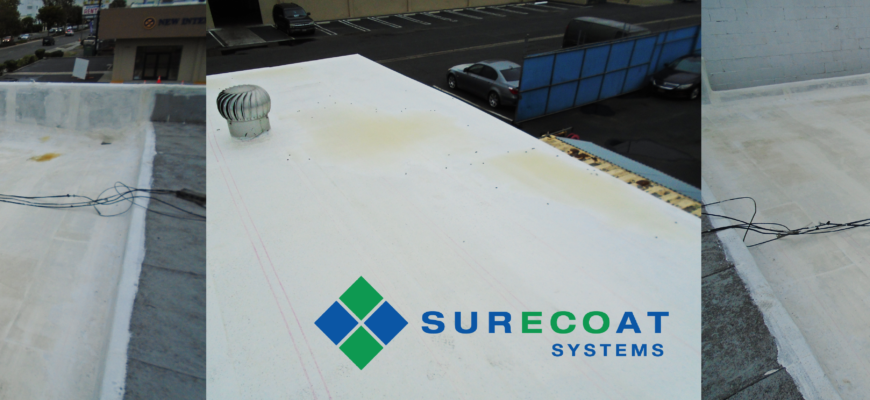
The roof above was in the path of a recent 4th of July celebration. The wrong roof assembly could have potentially turned into a fire, but on this SureCoat roof, the only damage was the remnants of fireworks littering the roof. No fires here!
As an added benefit, SureCoat and StrucSureCoat have a higher reflectivity, reducing energy costs, and lowering the interior temperature in areas where office and warehouse personnel, computers or other temperature-sensitive equipment are kept.
For more information on our products’ codes and approvals call 877 823-7873 or visit Surecoatsystems.com.
Inspecting Your Roof is Not a Choice, it’s a Must.
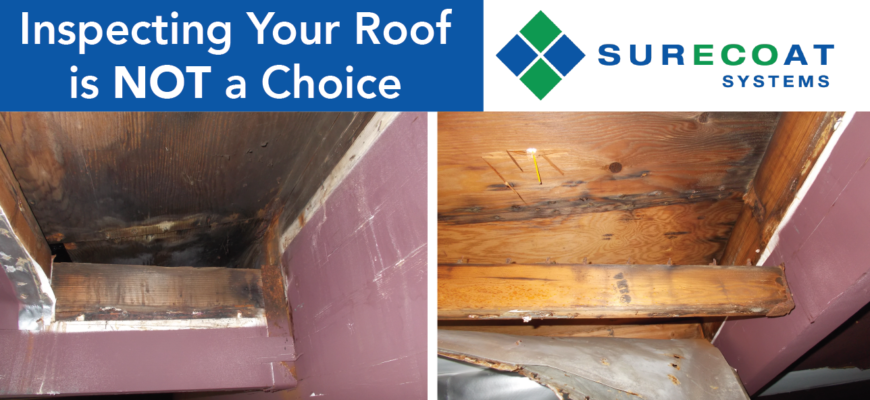
Why regular roof inspections may save you time and money
Recently we covered a few of the challenges that contractors face when working on roof repairs. In today’s blog, we go back to the very beginning- Step one: Identify damage by doing regular roof inspections.
One of the most important things about making your roof last, along with selecting the right products, is regular roof inspections. Lack of maintenance is the single largest factor leading to premature roof failures. Regular inspections can help avoid the need for untimely replacements or repairs.
If that weren’t enough, there is another BIG reason for regular inspections. This one hitting where it hurts most, your wallet. The cost of an annual roof preventative maintenance program is between 1 to 2% of the replacement value of the roof. By simply investing that small amount of the replacement cost every year, you increase the expected service life of the roof by a whopping 50 to 100%, which is just sound fiscal management.
Regular roof inspections can help you catch problems while they are still minor and easily fixed to maintain your warranty. Issues that arise from lack of maintenance can void some warranties. Inspections also allow you to take timely action or create a plan to solve the problem based on your available budget. Lastly, roof inspections can also help avoid loss or damage to secondary property such as internal or external equipment, furniture, or even having to shut down your business for a prolonged period of time because of roof major system failures.
So, whether you have mastered the “maintenance gig” with regular inspections or are just now jumping into the “maintenance wagon”, SureCoat Systems can help.
SureCoat Systems can help you assess your roof and can help create an annual report that will notify you of areas that need attention such as delaminated areas, worn waterways and areas where water ponds, cracks and splitting around new or old penetrations, blisters, parapet walls separating and failing, deteriorating caulking, equipment curbs, drains and more.
This report will also help you obtain enough information to plan a budget for future repairs to get the most out of the life of your existing roof.
Best of all, the average regular roof inspection takes approximately 45 minutes. Less than an hour of your day, can save you days or even months of headaches in the future. A roof inspection usually consists of examining the roof surface material as well as carefully assessing underlying areas of the structure such as eaves, chimneys, fasteners, and other vulnerable spots, and although building owners can spot many obviously damaged areas, a trained professional will be able to catch those issues invisible to non-roofing professionals.
So, don’t wait until there is a problem such as rain or winter storm coming your way since that will be the time when roofers are swamped with calls. It’s also the hardest time to find available products that can be applied in wet and cold conditions, and the further deterioration of existing problems can mean spending a lot more money and time than you expected on a repair. Call SureCoat Systems 877-823-7873 or click today for an Approved Contractor in your area, and get ahead of the curb to protect and prolong the life of your existing roof. Let your repairs be the start of your new roof!
Working in Inclement Weather Made Easy With SureCoat Systems
Avoid project delays, and profit loss due to rainy weather
Image above: SureSet repair completed at 2pm, rain hit at 6pm. No leaks or coating damage reported after rain.
In our last blog, we explored the challenges contractors face when repairing a gravel roof. In this blog, we will address yet another challenge faced by contractors almost everywhere in the country – Rain.
Rain makes all things grow. If you are in landscaping, rain can be a great thing, but in roofing, well, that’s another story. Rain causes project delays and creates ponding water situations that increase the chance of a leak, so of course, it’s no wonder that it’s during those rainy times that your customers will call you for leak repairs. Being able to tend to these calls quickly gives you a winning edge over your competition and helps avoid bigger leak and ponding issues that compromise the integrity of their whole roof.
To add to the challenge, the World Meteorological Organization (WMO, www.wmo.int) describes the term “severe weather” as “…any dangerous meteorological phenomena with the potential to cause damage, serious social disruption, or loss of human life.” Accordingly, the definition is vague, and lacks any specificity for the construction and roofing industries. This means that what your customer sees as a reasonable weather delay and what you see as one may not be the same, putting your business in a potential battle over “acceptable missed deadlines”.
SureCoat Systems offers a convenient, high quality and easy to install solution for you, SureSet.
SureSet is a quick-set coating used to embed high strength Poly-Mesh for waterproofing of flat and low-sloped roofing membranes, saving you from having to stop roofing because inclement weather is coming your way. Within reason, installation guidelines and temperature, this product can be used just about any day of the year to repair or restore a roof.
SureSet was designed to have high strength, high surface adhesion, be seamless and act as a quick-dry base coat used to attack the most vulnerable roofing issues. It is a class 1 waterproofing system and is cool roof rated once it is top-coated with SureCoat.
SureSet is engineered with the same high-grade raw materials as other SureCoat roof coatings but is fast drying and cures within 2-12 hours even when applied in temperatures as low as 40°F. Succeeding where traditional mastic and acrylic roof coatings fail.
Bottom line: SureSet eliminates the need for multiple repair trips, alleviates the worry and hassle of most temperature restrictions, morning dew and unexpected weather that prohibit the use of traditional roof coatings. And, quick-set technology saves on roofing labor and downtime. The SureCoat Roof System can be used to repair roof drains, waterproof ponding areas on a flat roof and seal roof seams, penetrations and ducts. SureCoat flat roof repairs are proven to last up to 10 years.
For proper results and sustainability, SureSet must be top coated with original formula SureCoat within 4-6 months.
SureCoat products are proven to work over the following substrates:
Watch this three-minute video, on how to complete a waterproof flat roof repair using SureSet. Click here to view our install video.
Call 877-823-7873 or click today to request pricing, specs, product data or for an Approved Contractor.
Related Products
Gravel Roof Repairs & Restorations Made Easy With SureCoat Systems

Avoid costly tear-offs by restoring your existing roof to ‘Better than New’ condition.
When it comes to existing gravel roofs, there are not many options for repairing them long-term. Often, a roof tear-off or SPF foam encapsulation are the only options suggested by roofing contractors. Unfortunately, both of these options are very expensive. Even foam roofs require a waterproof coating like SureCoat to protect them from moisture and UV. The SureCoat Roof System can be used directly over a spud gravel roof as a partial or full roof restoration system.
Another issue roofing contractors face, is that once a gravel roof is weathered and brittle, walking on the roof to perform leak repairs only increases the chances of developing more roof leaks since it is quite easy for the gravel to puncture the dried-out asphalt membrane during routine roof maintenance. The gravel hides the surface of the roof and often creates a water dam that increases the chances of ponding water for long periods of time. Then, there’s the chance that a leak can even appear to be in the same area of the roof that has already been repaired because water will always find the weakest point of entry and travel. This is why Flat and low-slope gravel roofs are some of the most difficult roof systems to detect and repair roof leaks. Sometimes years are spent chasing leaks prior to finally repairing them successfully.
This is where the SureCoat Roof System comes in as the longest lasting roof coating system for worn out gravel roofs that can add an additional 10-20 years of life back into an existing gravel roof without the need for a roof tear-off. And, not only will it extend the life of your old gravel roof, but once The SureCoat Roof System has been applied by an approved contractor, the new roof could have a non-prorated written warranty that covers leaks in roof ponds, and is renewable with inexpensive maintenance applications at the end of each 10 year warranty period.
Another benefit of applying The SureCoat product is its highly reflective properties which make the SCRS perfect under roof mount solar systems to increase energy capture and return on your investment. Additionally, SureCoat has a higher reflectivity and better self-cleaning ability compared to traditional elastomeric roof coatings, plus its increased durability, and adhesion compared to standard acrylic and silicone roof coatings. SureCoat is a Class 1 waterproof coating, exceeds FM standards for Class 1 fire resistance, windstorm and hail resistance and remains energy efficient as it weathers.
When it comes to gravel roof repair and restoration, SureCoat Systems has the right products to solve your problem and will be your partner throughout the installation process.
Read our Featured Gravel Restoration Project or watch our Gravel Repair Video to learn more about how The SureCoat Restoration System is the right solution for your restoration needs.
Call 877-823-7873 or click today to request pricing, specs, product data or for an Approved Contractor.
Related Products
Why You Should Invest in a Product That’s “Field Tested”

As you may know, the lab testing of coatings and roof systems is mandatory for proper design and installation. However, that is just the starting point for the people that are ultimately responsible for their performance.
If you are a contractor, an owner or an owner’s agent, you will most likely end up with the financial burden for the performance of these projects. If you are a contractor, your license, bond and liability insurance can be at risk. Because these roof projects are a considerable expense, owners and owners’ agents will want to make sure the roof system they are buying will perform on the roof. Nice shiny brochures full of promises are common, and so are the pages of disclaimers and pro-rated product defect guarantees that come into play when the product doesn’t perform well.
As a contractor, you need to KNOW that the products you are expected to stand behind will perform as claimed and when they don’t? You can be on the hook for thousands of dollars.
So, this begs the question, how do you know that you can trust a product? In short, field testing.
Because of the exact problems discussed above our “Field Tested” program was developed over 15 years ago.
At the time, there was a large commercial building with a flat roof that was suffering from lots of ponding, seams and roof penetrations that needed repair. The property management company was kind enough to let us use this roof as a test area for our SureCoat Systems product line as well as some of our well-known competitors’ products in real-world conditions for side-by-side testing. Because of the building’s convenient location, we have been able to monitor the testing for days, weeks and years to observe the performance of all of the materials installed in the actual conditions they are being exposed to daily. We recently had the opportunity to visit the large commercial flat roof that SureCoat Systems has used for long-term testing of the SureCoat product line. I am pleased to say that after 10+ years of being exposed to more than an inch of standing water for weeks after the rain and being cooked by the sun, the SureCoat is still doing its job.
We have continued to test countless roof products and applications during this time and continue to add new products to the SureCoat Systems line as the need arises. All of our products are “Field Tested” and applied on contracted jobs before they are released for sale to our customers.
The bottom line … We only sell proven ”Field Tested” products because that is the true measure of a product’s performance.
Are you using Field Tested products on your client’s roof?
How to Waterproof Between Rain Storms. With SureSet You Can – And Now at Our New Great Price!

Are you a weatherman or a roofer? Sometimes it’s hard to tell the difference, right? Any seasoned waterproofer and roofer knows how the weather always impacts dry times for water-based products. And, it’s inevitable that you’ll catch a shower or rainstorm no matter how much you watch the weather channel or monitor temperatures and dew point spreads. It’s complicated trying to manage all of your projects and Mother Nature.
Super VOC compliant and Zero VOC content coatings are water-based and susceptible to early wash-off if not cured properly before exposure to dew and rain. Many coating manufacturers have an elastomeric product and some, like SureCoat Systems, have already switched to only manufacturing solvent-free, elastomeric coatings and sealers. The real question is do they:
- Dry quickly?
- Have great adhesion?
- And, remain flexible?
Our contractors have done enough work with many other quick dry waterproofing products out there to know that most get brittle and don’t adhere well to the existing roof system. Out of necessity from the construction side, we worked to develop a solution, known as SureSet, that allows you to continue an installation or make repairs within hours of rain falling at your job site. Within reason and installation guidelines, this is a product that you can use most days (depending on weather) – a product that was designed to have high strength, stick like crazy, be seamless, and act as the base coat for the regular SureCoat product guaranteeing a cool roof rating once the SureSet is top-coated with SureCoat.
MORE on SureCoat Systems’ Quick-Dry Roof Coating
SureSet is a quick-set coating used to embed Poly-Mesh for waterproofing of flat and low-sloped roofing membranes in low temperatures, and within reason, inclement weather. SureSet is engineered with the same high-grade raw materials as other SureCoat roof coatings but is fast drying and cures within 2-12 hours when applied in temperatures as low as 40°F.
SureSet can be used for flat roof repairs in colder weather to seal roof seams, roof jacks, HVAC curbs, parapet walls, drains, waterways and to fix leaks where ponding water exists.
Bottom line: SureSet eliminates the need for multiple repair trips, alleviates the worry and hassle of temperature restrictions, morning dew and unexpected showers that prohibit the use of traditional roof coatings. And, quick-set technology saves on roofing labor and downtime.
For proper results and sustainability, SureSet must be top coated with original formula SureCoat within 4-6 months.
SureSet is the must-have wet weather roofing tool that your workers will be requesting. Get it now at our new lower price! >> info@surecoatsystems.com.
The Number One Tip You Need to Waterproof Right the First Time

A few of the most important questions we receive about our product line and waterproofing are: , “How do you ensure your clients and contractors are waterproofing right the first time? What is it about SureCoat Systems that is different? How do we know that the product we are installing is really waterproof?” The answer is simple. It comes down to the formulation of the product you’re using.
Specific guidelines have been established for testing and approval of liquid-applied roof coatings that help demonstrate how a product performs and if it will work to specification. Important standards tested are things like viscosity, elongation, tensile strength, accelerated weathering after specific lengths of exposure, adhesion, tear strength, permeability, UV resistance, and low-temperature flexibility. Creating a waterproof barrier is the ultimate goal of any roof system, and that’s why we want to focus on this one specific and critical standard known as perm rating, but more importantly a Class 1 perm rating.
What is Permeability?
Let’s break down what permeability means. Permeability is the state or quality of a material or membrane that causes it to allow liquids or gases to pass through. There are hundreds of white coatings on the market, and some are waterproof to a certain degree, and some are not. The property of permeability varies greatly depending on the type of coating and the quality of the ingredients. For example:
- Acrylic coatings are typically very breathable, meaning they have a high transmission rate of liquids or gases. These coatings are for decorative use and some UV protection; NOT waterproofing.
- Silicone coatings are also breathable, and perm ratings vary based on the blend and application thickness. Typically ratings are 1.000 to .0600 for silicone.
- Single ply roof systems such as hypalons, neoprenes, butyl rubber, etc., have perm ratings in the .0400 to .0800 range.
- The SureCoat Roof System is rated at .0025 making it the “Best in Class” waterproofer. Add that to the other cost-savings advantages and the choice is obvious; even simple: SureCoat – “When it has to be waterproof and affordable.”
It should also be mentioned that a perm rating should not be confused with resistance to weathering. Formulation and installation specification are also factors that help ensure optimal performance and adequate weather resistance.
“Best in Class” Perm Rating
When it comes down to it, the most important thing to remember is “the lower the number, the better”. Now, keeping that low number rule in mind, let’s look at the classes of ratings. In the building material industry, a perm rating of less than 0.1 is considered a Class 1 barrier meaning that it is deemed impenetrable by any liquid or gas – aka the best in class because it is completely waterproof. A perm rating between 0.1 and 1 is considered Class 2 meaning that it is semi-permeable, or some transfer occurs, and a perm rating between 1 and 10 is a Class 3 permeable material meaning that a liquid or gas can fully penetrate it – aka not water resistant at all.
So, we pose this question to you; when you’re in the market for a waterproofing roof system that extends the lifecycle of your roof, what type of product are you going to choose?
SureCoat has been tested and proven to be the solution for flat and low slope roofs across the country, performing in challenging conditions with roofs that have multiple components that need to be addressed. The outcome is always the same – less labor and no go-backs. We have one of the lowest published perm ratings for elastomeric roof coatings at a .0025. That is way less than 0.1 meaning we are a Class 1 rated roof system, absolutely no moisture penetration here. The proof is in the numbers. To get started visit www.surecoatsystems.comor call us at 877-8 BE SURE to talk to one of our waterproofing specialists to get started today.
How to Know What Roof Coating Protection You’re Really Getting

Episode #4 of Field Tested brings you the cold hard facts of the roof coating industry. Host Jesse Martinson shares what the roof coating industry looks like from an expert point of view and discusses the most prominent issue he sees within the industry. He talks about a recent client case study that demonstrates how the wrong product wastes time and money, and later, Jesse shares how the wrong product can impact your business and how to find the right roof coating to protect your business.
Big Three from Episode #004:
- Know what you’re buying
- Go to a products website and dig for the technical data
- Know the perm rating number the lower the better – below 1, think 0.999 or even lower
Time-stamped Show Notes:
1:03 – Jesse highlights the roof coating landscape in the industry from an expert point of view
2:51 – This is the biggest issue that the coating industry has across the country
4:28 – Jesse shares a recent warranty case study that happens way too often to many clients and contractors he works with
8:52 – How to understand what kind of roof coating you’re buying
9:49 – This is the number one thing you need to know when choosing a roof coating
13:05 – How the wrong product will impact a contracting business
Resources/Tools/Links Mentioned in This Episode:
The science behind the SureCoat Systems Product Line: https://surecoatsystems.com/the-science-behind-our-single-ply-roofing-formula/
Damage Repair 911

A lot of times weather is critical in roofing. If it’s too wet, too snowy, too cold, etc., many roofers shy away from doing certain projects. If you’ve been following along with us on our blog, podcast, or social media, we’ve been sharing tips, strategies, stories and feature projects where our quick curing product, SureSet, saves the day when facing weather challenges. In the following case study, we once again put our quick dry formula to the test to beat the California rainy season and to settle a tenant-landlord dispute.
The Backstory:
The property management company managing a shopping center that consisted of two buildings, one 15,000 sq. ft. and the other 5,000 sq. ft. had been working with us to repair their properties a little bit at a time due to budget restrictions. We would repair the most vulnerable areas and then when the budget allowed, continue to repair. However, the owner was struggling with a failing roof product and warranty that had been issued and did not cover the peeling, cracking and leaking that was occurring.
-

- DSC00886
-

- DSC00908
The Challenge:
When new tenants signed a lease for space, they also invested a lot of money in new equipment to help create an appealing environment for their customers. Enter the rain. The roof over this new tenant’s space was one that was previously repaired with the old failing product, and unfortunately, the landlord was unable to properly fix this area before the first rainfall. The leaking was severe and caused damage to the new equipment in the tenant’s space. The landlord was working to get warranty coverage from the company that installed the failed roof coating but was struggling to get them to stand behind their product. Upset with the landlord’s response time, the tenant retained an attorney to help get the owners to solve the roof issue.
-

- DSC01645
-

- DSC01655
-

- DSC01036
The Solution:
Threatened with another rainstorm approaching and the pressure from the tenant, the owners had to find a solution and fast. They reached out to us because they knew our product worked based on the repairs we’ve already done on their roof. The problem was, they weren’t sure if we would take the job because of the impending rain. Most companies would pass. Our innovator Jesse and his JemStar team jumped in to do the work with SureSet. Just 10 hours before the storm hit, his team was installing SureSet and because of the quick dry formulation, when the storm hit, there were no more leaks and no more equipment damage.
The Eight-Step Roof Drain Repair

Discovering a leaking roof drain is just one more annoyance to add to your “to-do” list. As inconvenient as it might seem, it’s one repair item that you should move to the top of your maintenance list. A roof drain is installed on a building to convey stormwater from the roof or deck to the storm drainage sewer or run-off area. Due to the amount of wear and ponding water that occurs around roof drains and in the waterways of the roof, roof leaks are common around these drainage areas. A leaking roof drain can and will cause severe property damage if not addressed quickly and repaired.

Take a look at this roof drain pictured to the right. This is a traditional roof drain found on commercial and industrial flat and low-sloped roofs. This particular roof drain has been repaired several times with mastic and acrylic coating products. These repairs were unable to withstand the UV exposure and ponding water conditions and the roof continued to leak around the roof drain.
The SureCoat Roof System is the proven solution for stubborn roof leaks like those around a roof drain that you dread about repairing time and time again. Why is SureCoat right for this type of repair? Because it is the only true seamless single-ply roofing membrane on the market today that will allow for partial installation and small repairs like this now when they are leaving your roof most vulnerable.
Movement and ponding that will cause roof materials to dry out and elongation to be lost will not happen with SureCoat. Our roof system is made to be a monolithic material with enough elongation in extreme temperatures and weather conditions so that it won’t lose its memory, become brittle and crack.
SureCoat is also a membrane forming material. It is a fully adhered system using high-quality resins that create an extreme bond onto the existing roof and become part of it. No mastics, adhesives, sealants, or other materials are used to install a SureCoat Roof System.
SureCoat consists of only one coating product that cures into a completely seamless, self-flashing, self-adhered, 100% waterproof, cool roof membrane that never needs to be replaced because it’s renewable.
Now on to the good stuff, here’s how to repair a roof drain leak in eight simple steps.
Need help getting started with your repairs? Talk to a SureCoat Systems waterproofing specialist now! Call us at 877-8 BE SURE (7873) or email us at info@surecoatsystems.com.