
Is Roof Restoration Covered by Commercial Insurance?
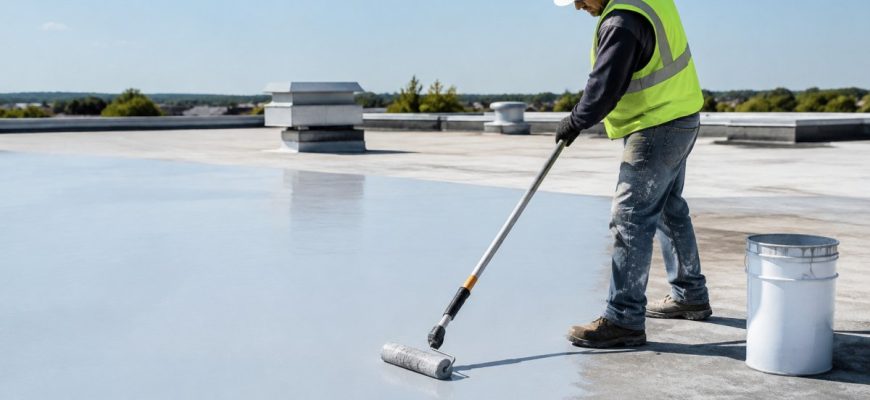
Last Updated: November 22, 2026
Quick Summary
Commercial roof restoration is covered by commercial insurance only when the damage comes from a sudden, covered peril, not from age or neglect. Commercial property policies generally address sudden damage from named perils such as wind, hail, or a falling object, and typically exclude a roof that has simply worn out.
- Standard commercial property policies usually exclude wear and tear, aging, deterioration, and lack of maintenance.
- Three things trigger a payable claim: a named peril occurred, the damage is sudden, and the damage is documented.
- Filing follows a fixed sequence: report, document, inspect, adjust, and settle.
- Actual cash value pays replacement cost minus depreciation; replacement cost value pays the full cost to restore.
- Schedule a roof inspection with a SureCoat approved contractor before you file a claim.
Table of Contents
- When Commercial Roof Repair Insurance Coverage Applies to Restoration
- How Commercial Roof Storm Damage Insurance Triggers a Claim
- Filing Commercial Roof Insurance Claims Step by Step
- Schedule a Roof Inspection With a SureCoat Approved Contractor
- Frequently Asked Questions
When Commercial Roof Repair Insurance Coverage Applies to Restoration
The short answer: commercial roof restoration is covered by commercial insurance only when the damage comes from a sudden, covered peril, not from age or neglect. Commercial property policies generally address sudden damage from named perils such as wind, hail, or a falling object, and typically exclude a roof that has simply worn out.
That distinction decides almost every claim. An owner may file a claim expecting a full restoration, only to have the adjuster point to years of deferred maintenance. The policy language matters more than the damage itself.
Here is how standard commercial property insurance treats roof claims:
- Covered: sudden and accidental damage from a named peril, like wind, hail, fire, or impact
- Usually excluded: wear and tear, aging, deterioration, and lack of maintenance
- Often disputed: pre-existing damage and ponding water that worsened over time
A policy is a contract, not a maintenance plan. Before you assume restoration is covered, read the exclusions page first. Insurance Information Institute guide to commercial property coverage explains how named-peril and all-risk forms differ.
If you want to understand what restoration actually involves before you file, see how fluid-applied roof restoration works and what it protects.
Standard commercial property policies sort roof claims into three buckets.
| Claim status | What it covers |
|---|---|
| Covered | Sudden and accidental damage from a named peril, like wind, hail, fire, or impact |
| Usually excluded | Wear and tear, aging, deterioration, and lack of maintenance |
| Often disputed | Pre-existing damage and ponding water that worsened over time |
How Commercial Roof Storm Damage Insurance Triggers a Claim
A storm claim starts with a covered peril, a date, and proof the damage happened then. Commercial roof storm damage insurance responds when wind, hail, or a similar event causes sudden harm the policy names. The burden is on you to connect the damage to that event. Because the cause of loss and the policy terms both shape a claim, Colstan & Associates can help connect storm damage evidence to the broader protections a business carries.
Three things trigger a payable claim:
- A named peril occurred. Check your policy’s covered causes list.
- The damage is sudden. A storm on a specific date, not a slow leak over years.
- The damage is documented. Photos, dates, and maintenance records.
This is where most claims stall. An adjuster who sees ponding water and worn seams will call it deterioration, not storm damage. Your job is to prove the storm caused it. That means dated photos and a clear before-and-after record.
For hail and wind damage specifically, our hail damage roof repair process shows what a restoration scope looks like after a storm.
Filing Commercial Roof Insurance Claims Step by Step
Filing a commercial roof insurance claim follows a fixed sequence: report, document, inspect, adjust, and settle. Skip a step and you weaken your position. Here is the order we recommend to building owners.
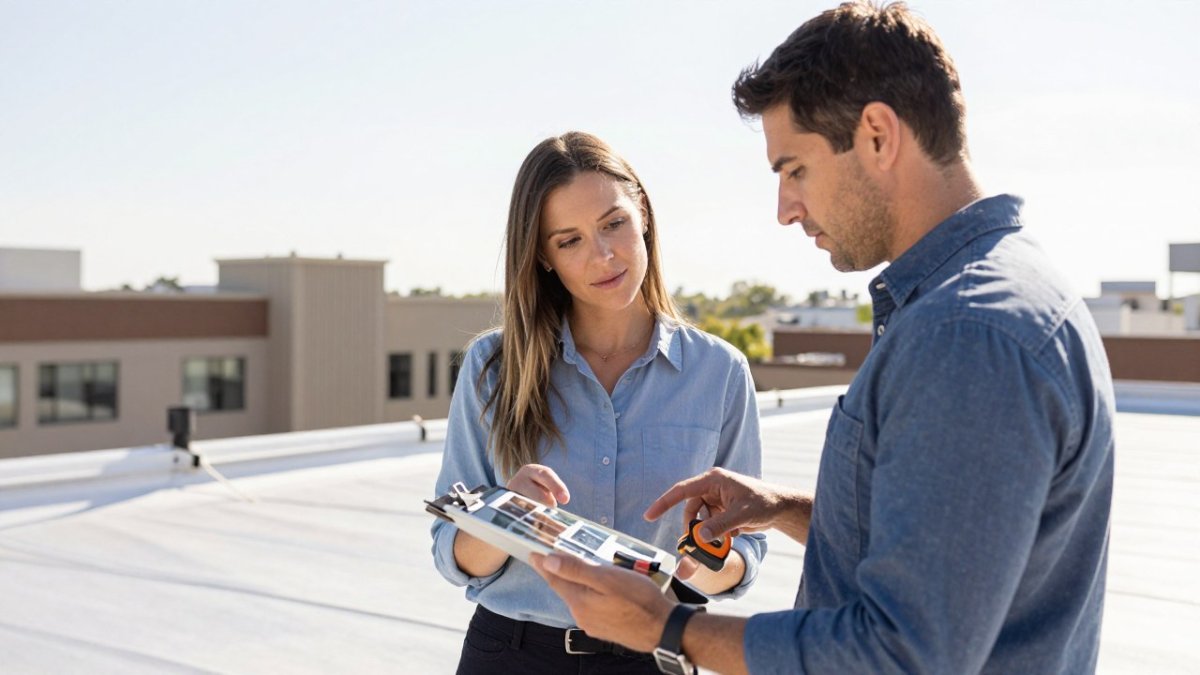
- Report the loss promptly. Notify your insurer in writing and note the date.
- Stop further damage. Make temporary repairs and keep every receipt.
- Photograph everything. Wide shots, close-ups, and a date reference.
- Pull your maintenance records. They prove the roof was cared for.
- Get a contractor estimate. A written scope of work with line items.
- Meet the adjuster on the roof. Walk the damage together.
- Review the settlement. Compare it to your scope and the policy limit.
Two valuation terms decide what you actually get paid. Actual cash value pays replacement cost minus depreciation (Are there different types of policies?). Replacement cost value pays the full cost to restore. Know which your policy uses before you file.
When you are ready to move from claim to repair, request commercial roof restoration service so the scope matches what you claimed.
Schedule a Roof Inspection With a SureCoat Approved Contractor
An inspection before you file is the single best move an owner can make. A SureCoat approved contractor can document the roof and provide a written scope of work that you can share with your insurer.
SureCoat Systems manufactures a fluid-applied epoxy hybrid membrane for restoring aging commercial and industrial flat roofs. When installed by an approved contractor according to warranty requirements, it is covered by a non-prorated, renewable manufacturer’s material warranty that covers ordinary ponding water.
The next step is simple. Schedule a roof inspection with a SureCoat approved contractor and get a documented assessment before you file.
Storm damage rarely waits for a convenient moment, and neither should your roof. SureCoat Systems helps building owners restore flat and low-slope roofs with a fluid-applied epoxy hybrid membrane, installed by approved contractors under a non-prorated, renewable warranty that covers ordinary ponding water. Get the inspection, the documentation, and the restoration scope your claim needs. Get started with SureCoat Systems and protect your roof before the next storm.
Frequently Asked Questions
Is roof restoration covered by commercial insurance?
It can be, but only when the damage traces to a covered peril such as wind, hail, or a sudden event. Policies typically exclude wear and tear, aging, and lack of maintenance, so a restoration claim built on deterioration will be denied. Review your policy exclusions and document the cause before you file.
Will insurance pay to restore a commercial roof after storm damage?
Many commercial policies cover storm damage, including wind and hail, and will fund restoration or repair up to policy limits after the deductible. Coverage depends on your specific policy language, the cause of loss, and whether the roof was already failing. A contractor inspection and dated photos strengthen the claim.
What documentation should I provide for a commercial roof insurance claim?
Gather dated photographs of the damage, maintenance records, contractor estimates with a clear scope of work, and a professional roof inspection report. Include any temporary repairs and mitigation invoices. This evidence helps the adjuster confirm a covered peril and separate storm damage from pre-existing conditions.

Easy Solutions to Low Slope Roof Failures – Part 1

How knowledge and prevention can make a BIG difference in the life of your commercial roof.
There are several factors that affect the lifespan of a flat roof. In this two part series, we will explore some of the most common ones; from what they are, how and why they happen, and what steps you can take to prevent or repair them.
Poor Installation
Craftmanship is the foundation of any project and can make or break a roof, so installation is of course a big one on our list. Poor installation can lead to serious issues down the road which can happen for a number of reasons, from hiring unlicensed workers, to not fully understanding how some types of roof systems need to be installed. Some require the use of primers, 2 and 3 component systems require specific installation methods, fasteners put into the roof substrate are sometimes not sealed properly, these reasons can lead to costly repairs and sometimes the need for a new roof altogether.

Top left: Roof damage due to weathering, Top right: Product Failure.
SureCoat Systems eliminates those concerns! SureCoat is a single component fluid applied roof system which is self-adhering, self-flashing, self-priming and doesn’t require any mechanical fasteners or holes put in the roof deck to attach it. SureCoat is easy to install and can be used for repairs, partials or full roof restorations so no more wasting money on products that don’t last.
Weathering
Weathering happens when nature adversely affects the roof, things like heavy rainfall, hail-storms, daily exposure to UV rays in extremely hot locations, as well as other natural phenomena can cause serious damage to an otherwise perfect roof. Many products, such as black coatings, will absorb heat and dry out at a faster rate. Metal roof systems will be more likely to be affected by oxidation from exposure to air and water. Systems that require the use of fasteners will also dry out and break in places because of the fastener’s rubber seal becoming dry, brittle and cracking from prolonged element exposure.
With SureCoat Systems, the effects of weather are minimized because it is a bright white hybrid elastomeric coating which has been engineered with the highest-grade raw materials and enhanced with cross-linked resins to provide waterproofing, increased durability and elasticity compared to traditional roof coatings. With its high reflectivity and low conductivity characteristics, SureCoat can help reduce energy costs and renew the life of existing roof systems. SureCoat is a Class 1 waterproofer with excellent adhesion properties and is compatible with a variety of substrates.
Wind Uplift
Wind uplift happens when severe winds come in contact with the building. The high pressures push air upward and when there is an opening, a crack or any areas where air infiltrates, it causes the pressure to rise thus causing a higher air force to impact the roof structure and causing it to lift from the rest of the building.
The SureCoat Roof System is a seamless, completely bonded system so there are no weak areas where the air can infiltrate into the structure and cause the roof to lift. SureCoat can be used on equipment curbs, skylights, vents, penetrations, HVAC and condensation lines, parapets and integrated into the field of the roof creating one monolithic membrane.
By understanding what these key factors are you will be able to save time, money and add years to the roof.
For more information about our products and to learn how you can become an approved SureCoatSystems contractor, or how to get in touch with one if you are a building owner, call one of our SureCoat Systems tech support members at 877-823-7873 or visit our
Santa Monica’s Heightened Environmental Status is No Match for This Historical Landmark’s Roof Repair

2525 Main Street, Santa Monica, is where the historical landmark building, Galleria DiMaio, resides. What makes it a historic landmark? It’s where Merle Norman started her make-up empire in 1927 and was later home to E.M. Stolaroff’s Natone Company, or as we know it, Neutrogena Skin Care Company. It’s a building that has gone through an extensive remodel in the 1930’s and an internal gut in 1980. For the current owners, a new roof hadn’t been an issue for the last 30 years until now. How do you perform a large volume tear off on one of the busiest boulevards in a city that has heightened environmental issues with tear offs? In short, you don’t.
The Stats:
- Type: Commerical Property
- Scope & Size: 13,000 square feet of installation over concrete waterproofed deck over plywood

“1000s of cars an hour pass this building,” says Pacific Roofing Systems, V.P. Alan Stovesand. “On top of the huge challenge of environmental regulations by the city and the multi-level height, we had to consider shutting down a major artery of the city to repair this roof. How do we overcome all of that?”
In one fell swoop, Alan was able to solve each of these challenges with the proposal of one product, SureCoat. By installing a SureCoat Roof System, they wouldn’t have to worry about transporting pieces of torn off roof down a three-story building with multiple dump trucks impeding the traffic flow. The roof was structurally sound, but its surface needed some help. Because there was no need for a tear off, there was zero waste going to the landfills. In fact, 13,000 square feet of roofing materials were prevented from polluting the landfills.
So what exactly did Alan have to do to get this roof fixed? To start, he simply had to clean it. Alan and his team prepped the roof for installation with SureSkrub, the biodegradable SureCoat roof cleaner. To make sure that they were meeting all of the environmental regulations of the city, which included monitoring drains and runoff that lead to the ocean, as many cities do, Alan and his team quickly solved by containing the water, filtering it, and reusing it in an agricultural area close by.

By offering the SureCoat solution, Alan was able to:
- Save the building owner tons of money by not tearing off the roof
- Save the environment from waste and pollution – there was ZERO waste vs. thousands of pounds from a tear off
- Collaborate and engineer a way to meet city water runoff regulations and reuse the runoff captured
- Avoid shutting down the main thoroughfare of the city
This successful roof repair was topped off with a 10-Year Renewable Energy Efficient SureCoat Roof Restoration System that will help guarantee that this building will remain a historical landmark for many years to come.
Benefits of Roof Restoration over BUR Cap Sheet

Benefits of Roof Restoration over BUR Cap Sheet
Did you know that the average commercial built-up roof (BUR) will require repairs by its 8th birthday?
Built-up asphalt with granulated cap sheet is a common traditional roofing system used for low-sloped and flat roof designs. Most commercial and industrial type buildings are designed with a low-sloped or flat roof. A BUR has a life expectancy of 15-20 years with repairs to ponds, curbs, drains and penetrations starting early in the life cycle.

Black mastic repairs that are failing over BUR Cap Sheet
The truth is that BUR systems will require maintenance repairs in the ponding areas and at seams and penetrations throughout its lifespan to keep the roof from leaking. Leaks found in low-sloped and flat roofs are most commonly caused by ponding water and thermal cycling from sun exposure. Even when installed to specification with proper maintenance, a BUR does not have coverage for leaks in ponding areas.
Thermal cycling and water, especially ponding water, erode the mineral cap of BUR leaving the black asphalt exposed. Asphalt is not UV resistant and absorbs heat and UV radiation.
Once the granulated surface has worn off of a traditional BUR, often white acrylic roof coatings are used as maintenance to protect the asphalt from further UV deterioration. Acrylic roof coatings will add UV resistance to the exposed asphalt but will not protect against water intrusion, especially a roof with ponding water.
By investing in a roof restoration system over a BUR you can eliminate the need for future roof replacement. Roof restoration systems are monolithic and don’t usually require that business operations be interrupted during installation. Roof restorations are less expensive than roof replacement and offer a tax benefit as a maintenance expense.
What happens to a BUR that is not properly maintained?
The heat and UV cause the asphalt sheet to dry out and crack. At this point the roofing material can no longer move with thermal cycles and the seams separate. Once the exposed fiberglass mat and felt become dried out, deterioration of the BUR system accelerates. By this time, the mastic around penetrations has also become brittle and split allowing for water intrusion into the BUR system and leaks appear inside the building.
If a BUR is already showing signs of leaks, an acrylic roof coating is not the solution. It is usually at this point in the lifespan of a BUR that a roof restoration is recommended to prevent saturated insulation, plywood or metal substrate damage and mold.
When considering a roof restoration system, ask for proof on the roof! For nearly 20 years, Field Testing has proven that restoring an existing traditional roof system with a SureCoat Roof Restoration System lowers the cost of roof maintenance, roof repairs and future roof budgets. Additional Field Testing proves that a SureCoat Roof Restoration System will not leak under Ponding Water.
Facts and Benefits of a SureCoat Roof Restoration:
- Ponding water will not void the roof warranty
- Cool Roof Compliant for the life of the system
- Energy savings of up to 30%
- Waterproof epoxy-hybrid; Not an acrylic
- Renewable every 10 or 20 years
- Resistant to animal fats, mold, mildew and most chemicals
- Excellent adhesion to existing roofing materials
- No penetrations in the roof deck
- Self-Adhered, Self-Flashing and Self-Priming; No separate flashings or primers
- Easy to install
- Cost less than roof replacement
- No tear-off required; Installed over existing roof system
- Tax savings as a maintenance cost
- Non-disruptive to tenants
- HVAC units do not need to be shut down
- Low VOC; No offensive odors
Not all roof restorations are the same. Be Sure with SureCoat. Call 877-823-7873 for a FREE Quote today.