
Gravel Roofs: What They Are and How to Maintain Them
Last Updated: November 20, 2026
Quick Summary
A gravel roof is a built-up roofing system topped with a layer of loose aggregate that protects the waterproof membrane beneath it. The stone layer holds the underlying plies in place while shielding them from sunlight, and it blocks UV degradation, adds thermal resistance, weighs down the membrane against wind uplift, and protects the waterproofing from foot traffic and hail.
- Gravel blocks UV degradation, adds thermal resistance, weighs down the membrane against wind, and protects it from foot traffic and hail.
- Watch for bald patches, surface cracking, ponding water lasting more than 48 hours, and clogged drains as failure signs.
- Clear debris from drains and scuppers and check that the roof slopes toward them to fix ponding water.
- A professional restoration runs seven steps, from inspection and moisture scans to coating, curing, and final sign-off.
- Skip restoration if core samples or moisture scans confirm widespread wet insulation, structural deflection, or delaminating membrane.
Table of Contents
- What Is a Gravel Roof and How Does It Work
- Pros and Cons of a Ballasted Gravel Roof
- Signs Your Tar and Gravel Roof Is Failing
- What Tar and Gravel Roof Repair Cost Looks Like
- Fixing Ponding Water on Flat Roofs
- Roof Restoration vs Replacement: Which Fits Your Building
- Step-by-Step Gravel Roof Repair and Coating
- Gravel Roofs, Solar Panels, and Recycling
- How to Find a Contractor for Your Gravel Roof
- Schedule a Gravel Roof Inspection with a SureCoat Approved Contractor
- Frequently Asked Questions
What Is a Gravel Roof and How Does It Work
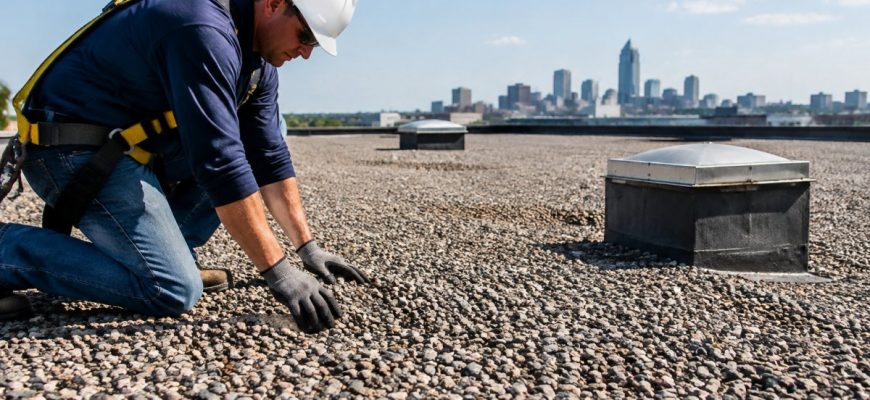
A gravel roof is a built-up roofing system topped with a layer of loose aggregate that protects the waterproof membrane beneath it. Gravel roofs are often described as ballasted roofs because the stone layer holds the underlying plies in place while shielding them from sunlight.
The exact keyword matters here: a gravel roof is not a single product but a system of layers working together.
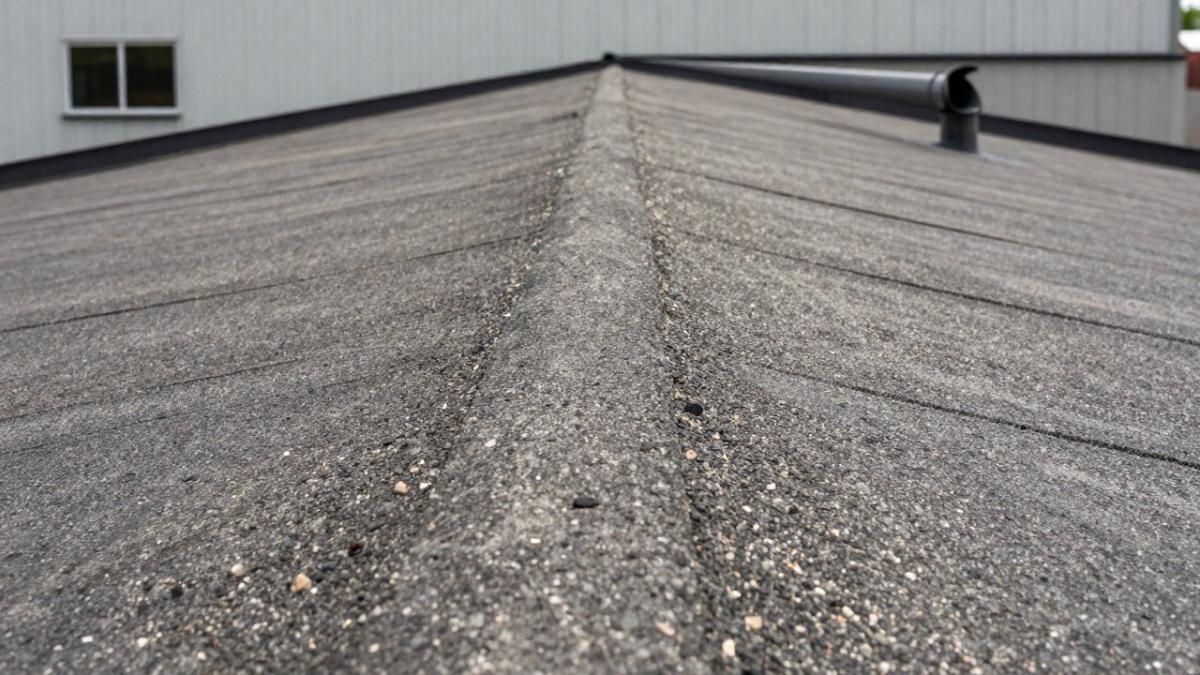
Layers of a Built-Up Roofing System
Built-up roofing, usually shortened to BUR, stacks alternating layers of roofing felt and hot asphalt or bitumen. A fiberglass membrane or organic mat forms each ply.
That stack gives the assembly its weather resistance. Each ply reinforces the one below, and the asphalt seals every seam. The roof substrate beneath provides structural support, while insulation boards control heat loss.
The Purpose of Gravel on Flat Roofs
Aggregate is not decorative. It serves four jobs:
- Blocks UV degradation that breaks down asphalt and causes surface cracking
- Adds thermal resistance and reduces heat absorption into the building
- Weighs down the membrane against wind uplift
- Protects the waterproofing layer from foot traffic and hail
Remove the gravel and the bitumen starts aging fast.
Pros and Cons of a Ballasted Gravel Roof
The honest answer is that gravel roofs excel at durability and struggle with maintenance access. Weigh both sides before you commit to repair or restoration.
Pros:
- Strong UV protection and long roof lifespan when maintained
- Good energy efficiency from the aggregate’s thermal mass
- Excellent weather resistance against wind and hail
- Simple, proven assembly with widely available materials
Cons:
- Heavy load that some structures cannot support
- Difficult to inspect, since leaks hide under the stone
- Loose gravel scatters and clogs roof drainage
- Repairs require moving aggregate before anyone can find the problem
A common mistake is skipping inspections because the surface looks intact. Water travels sideways under the ballast, so the first visible sign is often a ceiling stain far from the actual breach.
Signs Your Tar and Gravel Roof Is Failing
Watch for these signals that a tar and gravel roof needs attention:
- Bald patches where aggregate has washed away, exposing bare bitumen
- Surface cracking, blistering, or alligatoring across the membrane
- Ponding water on flat roof areas that lingers more than 48 hours
- Rusted or clogged drains and scuppers
- Stained ceilings, musty odors, or visible flashing separation
Thermal shock accelerates all of this. Repeated heating and cooling cycles make the asphalt brittle, and once the membrane loses elasticity, seams open.
What Tar and Gravel Roof Repair Cost Looks Like
Tar and gravel roof repair cost depends on the failure’s extent, roof size, and whether the fix is a patch or a full restoration. Pricing depends on quantity, scope, and site conditions, so request a quote for current pricing.
**
**
**
For a realistic side-by-side of repair and coating options, our roof coating cost comparison breaks down how the approaches differ in scope and long-term value. Request current pricing from SureCoat Systems or an approved contractor, and ask whether the quote includes a moisture survey before any coating is specified.
Fixing Ponding Water on Flat Roofs
Ponding water on a flat roof is standing water that remains after rainfall, and it can contribute to membrane failure on low-slope buildings. Water weight stresses seams, and repeated pooling drives moisture into the roof substrate.
Start with drainage. Clear debris from drains and scuppers, then check that the roof slopes toward them. Many ponding problems trace to a blocked or undersized drain rather than a structural issue. Our guide to the eight step roof drain repair walks through diagnosing and correcting drain failures step by step.
If drainage is sound and water still pools, the deck may have settled. That is a structural question, not a coating question, and it needs an engineer’s assessment.
Roof Restoration vs Replacement: Which Fits Your Building
Restoration is generally suitable when the existing roof is structurally sound and the waterproofing layer can still bond to a new membrane. Replacement is generally suitable when the deck, insulation, or substrate has failed.
Ask three questions:
- Is the deck structurally sound and free of wet insulation?
- Is the existing membrane well adhered, with no widespread saturation?
- Does the building need to stay operational during the work?
If the answers favor keeping the roof, a fluid-applied coating system can restore waterproofing without a tear-off. A real example is the Clear Properties gravel roof restoration, which shows how an aging gravel roof was brought back without full replacement.
The long-term cost view. Model the decision across the remaining service life rather than the first invoice. A restoration resets the waterproofing clock but does not add structural capacity, so if the deck or insulation is already compromised, a coating alone may not resolve the underlying condition. Replacement involves a tear-off and resets the entire assembly, including insulation and deck repairs. The right choice depends on how many years of service the existing membrane has left.
Disqualifiers for restoration. Skip the coating conversation entirely if any of these are present:
- Widespread wet insulation confirmed by core samples or moisture scans
- Structural deflection or ponding caused by deck settlement
- Membrane that is not well adhered or is delaminating across large areas
- Active leaks that cannot be traced to a repairable detail
Sequencing matters. If solar panels, HVAC replacements, or other roof-mounted equipment are planned, schedule the restoration before that work so the membrane is continuous beneath the new equipment. Coating around future penetrations costs more and creates seams.
A common mistake is choosing restoration without a moisture survey. Coating over saturated insulation can trap moisture and lead to blistering.
Step-by-Step Gravel Roof Repair and Coating
Here is how a professional gravel roof restoration typically runs:
- Inspect and document. Core samples and moisture scans confirm the substrate is dry.
- Clear the aggregate. Loose gravel is removed where the new membrane must bond.
- Repair the substrate. Blisters, splits, and seam failures get cut out and patched.
- Address flashings and drains. These are the most common leak points.
- Apply primer and reinforcement. Polyester fabric bridges seams and penetrations.
- Apply the coating. A single-component epoxy hybrid membrane goes down as a seamless, monolithic layer.
- Cure and inspect. The crew checks thickness and coverage before sign-off.
For a detailed walkthrough, see gravel roof repairs and restorations made easy with Surecoat systems. Watch out: applying coating over wet insulation can trap moisture and lead to blistering.
A professional gravel roof restoration follows a set sequence from inspection to final sign-off.
| Step | What to do |
|---|---|
| 1 | Inspect and document with core samples and moisture scans |
| 2 | Clear the aggregate where the new membrane must bond |
| 3 | Repair the substrate: cut out and patch blisters, splits, seams |
| 4 | Address flashings and drains, the most common leak points |
| 5 | Apply primer and polyester fabric reinforcement |
| 6 | Apply single-component epoxy hybrid coating as seamless layer |
| 7 | Cure and inspect thickness and coverage before sign-off |
Gravel Roofs, Solar Panels, and Recycling
Two angles most guides skip deserve attention.
Solar integration. The catch is load: the ballast plus panels may exceed structural capacity, so an engineer must confirm limits first. If a coating restoration is planned, sequence it before panel installation.
Recycling. When replacement is unavoidable, ask contractors about recycling options before the dumpsters arrive.
How to Find a Contractor for Your Gravel Roof
Look for a roofing contractor who specializes in commercial low-slope systems, not residential shingles. Ask for:
- References from similar ballasted roof projects
- Manufacturer approval status for the coating system specified
- Written warranty terms, including how ponding water is treated
- Proof of insurance and licensing
A common mistake is choosing the lowest bid from a crew that has never worked with aggregate roofs. Gravel hides defects, and an inexperienced crew will coat over problems that resurface within a year.
We recommend evaluating what system the contractor intends to apply before signing. Our overview of waterproof roof coating systems for commercial low-slope roofing explains what to look for in the specification, including warranty coverage for ordinary ponding conditions.
Schedule a Gravel Roof Inspection with a SureCoat Approved Contractor
Aging gravel roofs rarely fail overnight. They fail slowly under stone that hides the damage, until a ceiling stain forces the issue. The buildings that avoid emergency replacement are the ones inspected on a schedule.
SureCoat Systems manufactures fluid-applied epoxy hybrid membrane systems for commercial flat roofs. Our single-component, seamless membrane bonds to prepared substrates, and our non-prorated, renewable manufacturer’s warranty covers ordinary ponding water conditions when an approved contractor installs the system to warranty requirements. Products are Energy Star and California Title 24 compliant, with low-VOC formulations.
Get started with SureCoat Systems and extend the life of your existing roof without a disruptive tear-off.
If your building has ponding water, recurring leaks, or gravel that has gone bald, the fix starts with an honest inspection. SureCoat Systems pairs high-performance membrane systems with approved contractors who assess whether your roof qualifies for restoration. Ask about the renewable warranty that covers ordinary ponding conditions, and get a clear answer on whether restoration or replacement fits your building.
Frequently Asked Questions
What is a gravel roof called?
A gravel roof is technically known as a built-up roofing system, or BUR. It is built from alternating layers of asphalt and roofing felt or fiberglass membrane, finished with a flood coat of bitumen and a layer of gravel aggregate. The gravel is what most people see from the ground, which is why the nickname stuck. Many contractors also call it a tar and gravel roof or a ballasted roof.
How long does a gravel roof last?
A well-maintained built-up roofing system typically lasts 15 to 25 years, and some reach 30 years when drainage and coatings are kept in good condition. Lifespan depends on how much ponding water the roof holds, how often it is inspected, and whether the bitumen has dried out and cracked. Roofs that are recoated or restored before the membrane fails tend to reach the upper end of that range.
Why do people put gravel on their roofs?
Gravel protects the asphalt or bitumen layer from UV degradation, which is the main cause of surface cracking on a flat roof. The aggregate also adds weight that holds the roofing felt and membrane in place, improves weather resistance against wind and hail, and adds a small amount of thermal resistance. It also gives the roof a longer lifespan by shielding the waterproofing layer from direct sun.
How can you tell if a gravel roof needs repair?
Watch for bare patches where the gravel has washed away, dark stains or blisters in the bitumen, and water pooling near drains for more than 48 hours after rain. Interior clues matter too: ceiling stains, musty odors, and daylight at flashing seams. Any of these signs means it is time for a roof inspection before small surface cracking turns into a roof membrane failure.
Is coating a gravel roof cheaper than replacing it?
A roof restoration with a fluid-applied coating can avoid the disruption of a full tear-off and replacement. Pricing depends on quantity, scope, and site conditions, so request a quote for current pricing. A coating works when the existing roof substrate is still sound and the leaks come from seams, flashings, or surface wear. If the insulation is saturated or the deck has failed, replacement is the better call. A contractor inspection is the only way to know which applies to your roof.
Can you install solar panels on a gravel roof?
Yes, but ballasted solar mounts work better than penetrations on a gravel roof because they avoid cutting through the waterproofing layer. The added weight of both the gravel and the panels needs to be checked against the building’s structural capacity. Many owners restore the roof membrane first, then add solar, so the waterproofing warranty stays intact and the roof does not need to be torn up later.